There is definitely something different about islands. And, we mean islands in general.
OK, it’s not the obvious that they’re all surrounded by water. It’s that people who live on islands need to be somewhat self-reliant. Consequently, they develop their own subcultures and their own sort of quirkiness. And it seems the smaller the island, the quirkier. For example, Jay’s mom grew up on a small island in the middle of the Columbia River. Everyone on the island knew each other (and each other’s business) and the “islanders” were looked upon as being different from their neighbors in oh-so-cosmopolitan Cathlamet on the mainland of Washington. Even the folks on large islands, like Great Britain, are so quirky they can’t even agree to be part of their European neighborhood 20 miles across the Channel. And, the odds are that the 100 residents on Pitcairn Island definitely have developed their own individual subculture. All this verbiage merely serves as a prelude to our adventuring duo’s final stop on their 2017 Insanity tour, the Portuguese Island of Madeira, a wonderful conclusion to this around-the-world madness.
Folks on Madeira definitely display their own unique quirkiness. Who else would think it was wildly entertaining to have two guys in white outfits and straw hats push and guide two-person wicker baskets on a 10-minute sleigh ride down city streets? This activity has continued for decades ever since someone once had this goofy idea and it’s now a major tourist event on the island. 
Or, how about the idea of marketing a sweet port-like wine, sold in regular, five and ten-year vintages as a product that was miraculously discovered after a barrel of normal wine was accidentally left out in the hot sun, and when opened, “voila”, Madeira! Seems that we’ve heard something similar in the Dom Perignon story of the French monk who discovered champagne, “Brothers! I am drinking stars!”.
Another oddity—Madeira supposedly features the world’s largest New Year’s Eve fireworks show, a claim we’d never heard before and have no way of verifying. There aren’t all that many people who live on the island so maybe this is their big way of entertaining themselves once a year.
But, arguably the quirkiest spot on Madeira is the Monte Palace Tropical Gardens. Accessed by taking the Teleferico do Funchal cable car up to the hillside overlooking the main town of Funchal, this place is both beautiful and bizarre.
Originally developed as a pleasant estate by the British Consul to Madeira, Charles Murray, in the 18th century, the property was acquired in 1897 by Alfredo Guilherme Rodriguez, a guy who obviously possessed a certain degree of quirkiness. He built the Monte Palace Hotel on the site and developed a portion of the grounds based upon the places he had traveled to.  Rodriguez especially liked the castles he had seen on the Rhine River in Germany and tried to replicate some of what he had seen.
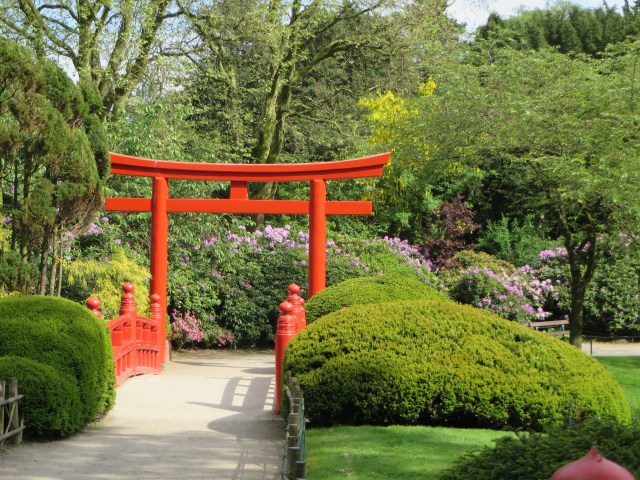
But then Rodriguez really got carried away and developed the grounds into a Japanese style park.
Rodriquez then went on to include in the park one of the largest collections of tile panels in the world, many of which are from the 15th and 16th centuries, depicting Portuguese history. This particular tile caught our eye and shows a smiling warrior gouging out another guy’s eye before doing him in with his sword. Poor smiling guy doesn’t see the enemy warrior behind him who is about to chop off smiling guy’s own head. Very entertaining. 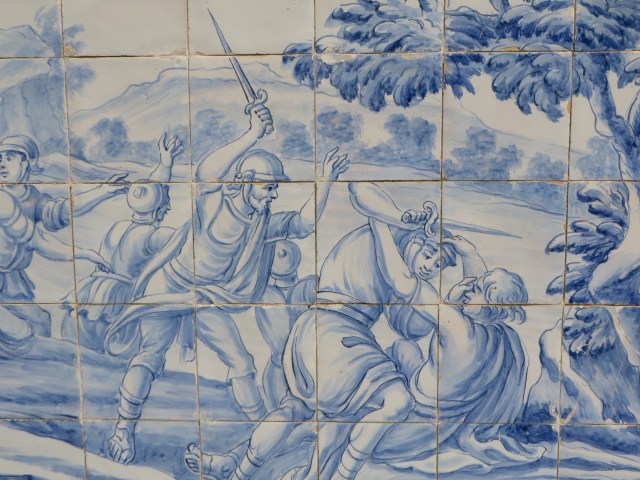
To top off the variety of themes at the Monte Palace Tropical Gardens there is a little museum that features a collection of sculptures from Zimbabwe and a display of minerals from Brazil, Portugal, South Africa, Zambia, Peru and Argentina. We overheard one visitor leaving the museum saying, “What the heck was that all about?”. The hotel and complex were closed after the death of Rodriguez in 1943, taken over by the bank and finally sold to another quirky guy in 1987, who was responsible for the African art, restoring the grounds and keeping the operation going. The Gardens may be unusual but they are indeed beautiful and a highlight of Funchal, Madeira.
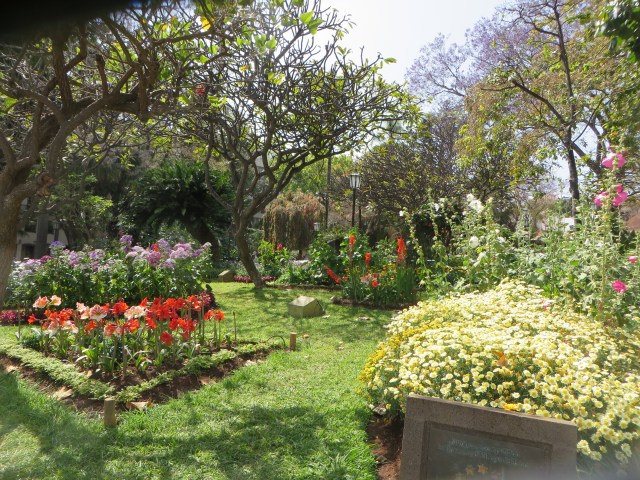
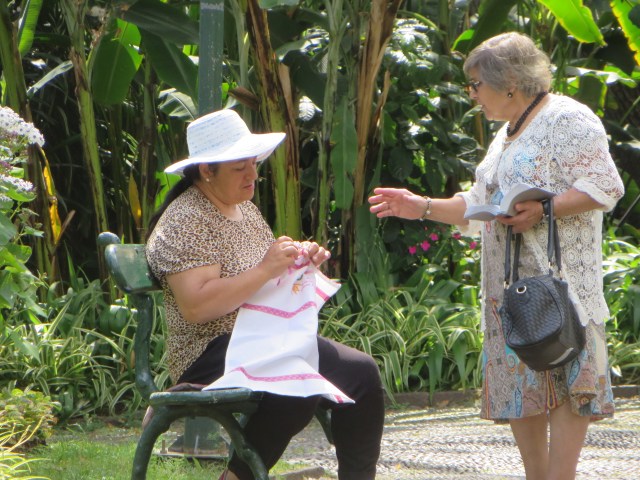
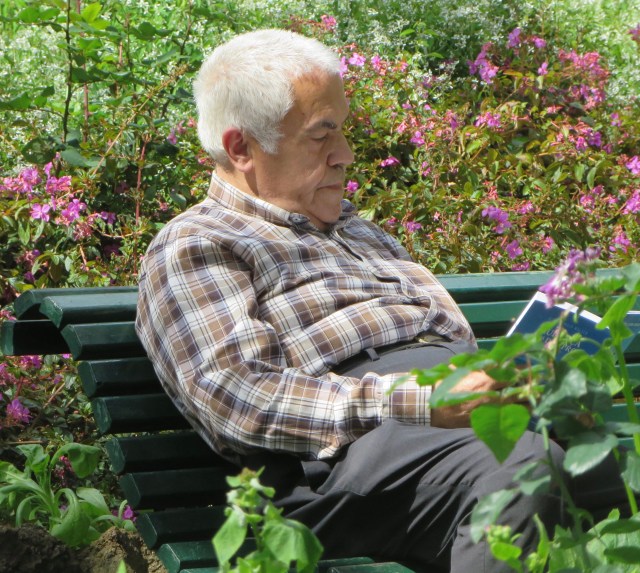
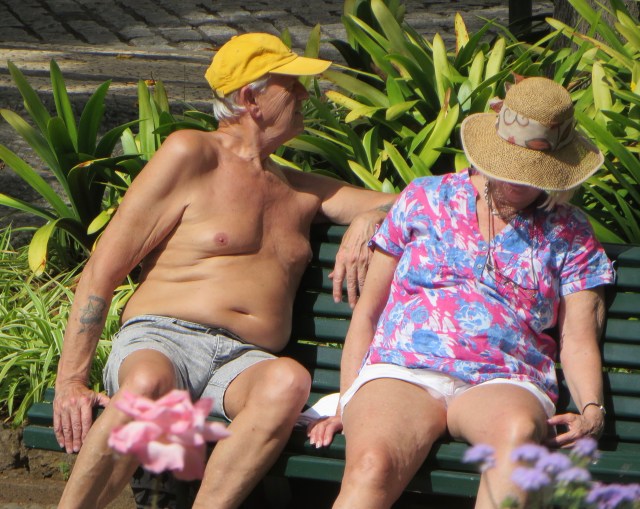
The city of Funchal itself is full of gardens and its residents, many of whom are retired, enjoy the sunny days and overall relaxed atmosphere of this beautiful island.




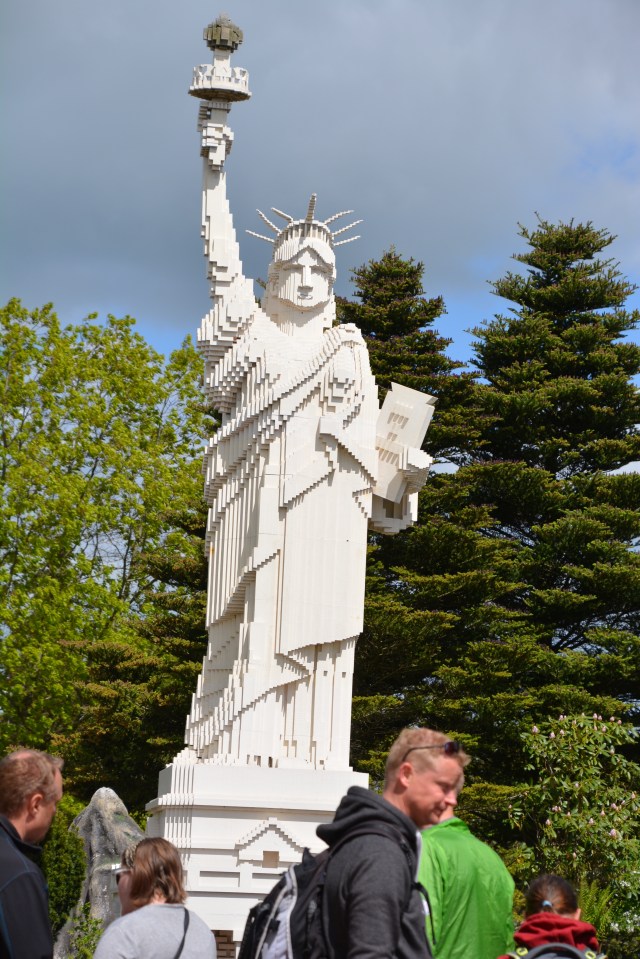



 Here, under the watchful supervision of zookeepers, visitors can lean over a railing and personally feed the elephants carrots and apples sold at a nearby stand. This is a hit with visitors and it looks like the elephants enjoy the experience too.


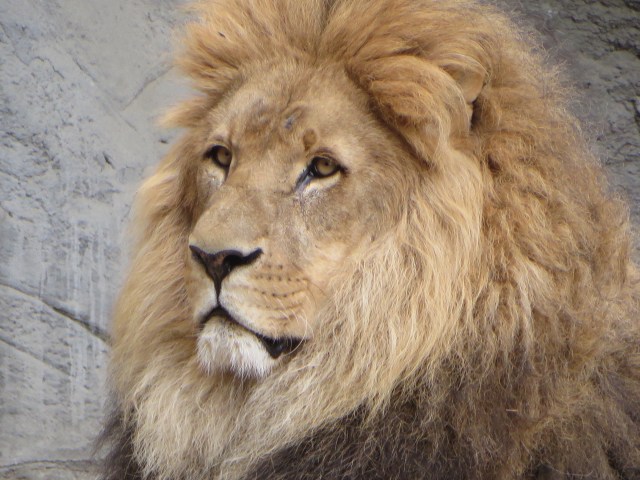
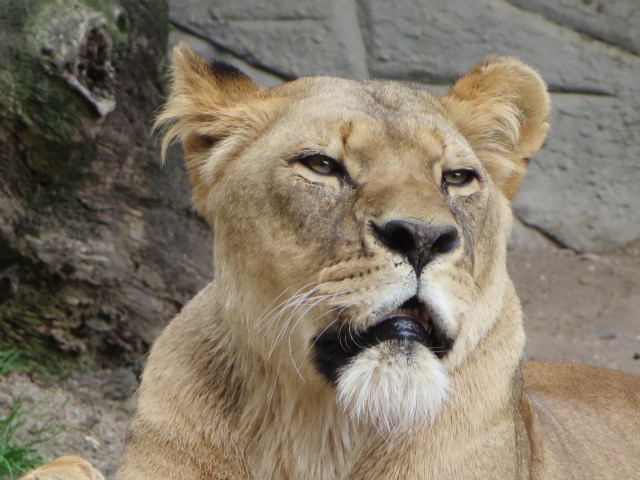

 Regardless of one’s opinions of zoos in general, Hagenbeck’s is one of the best examples we’ve seen of respecting and caring for animals outside their natural habitat. From central Hamburg the park can be reached by taking the U2 to Hagenbecks Tierpark station. Their website is www. hagenbeck-tierpark.de.
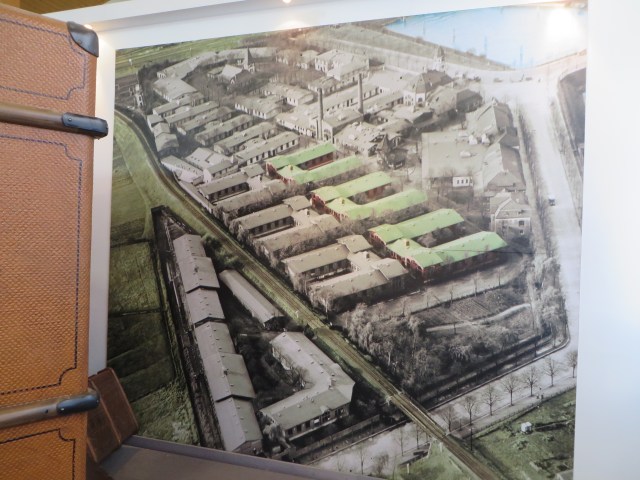 Reconstructed buildings are those shown with green roofs in this photo.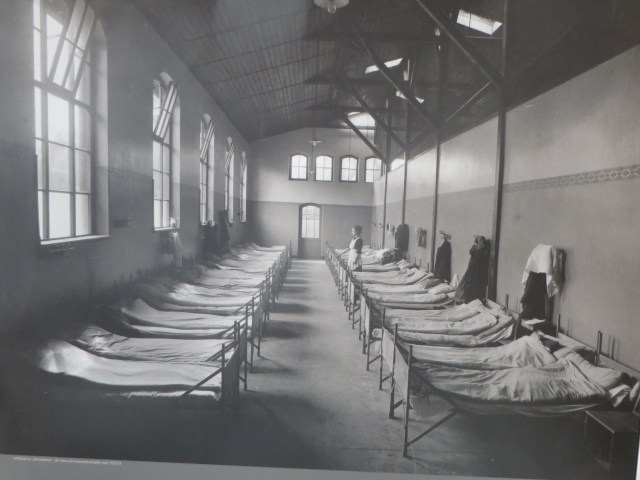
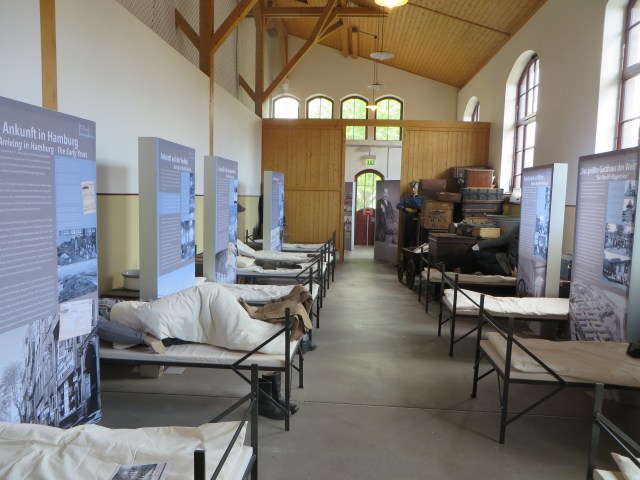
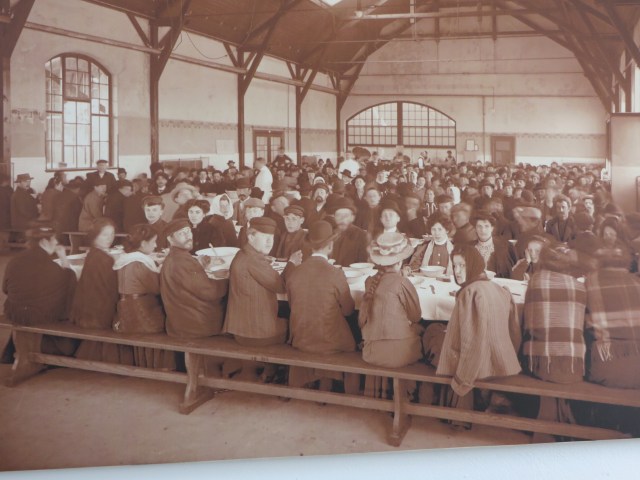


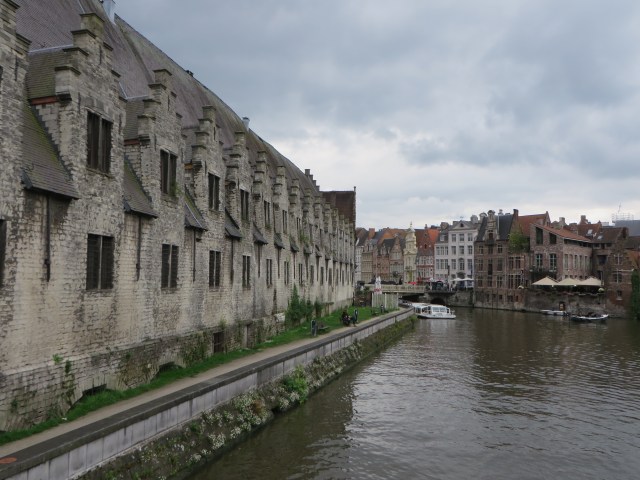
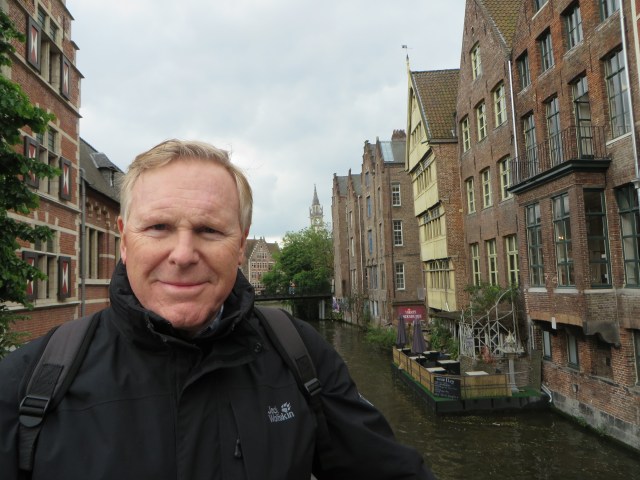
 Ghent, the capital of East Flanders, Belgium has been one of Jay and Tanya’s favorite places for years.



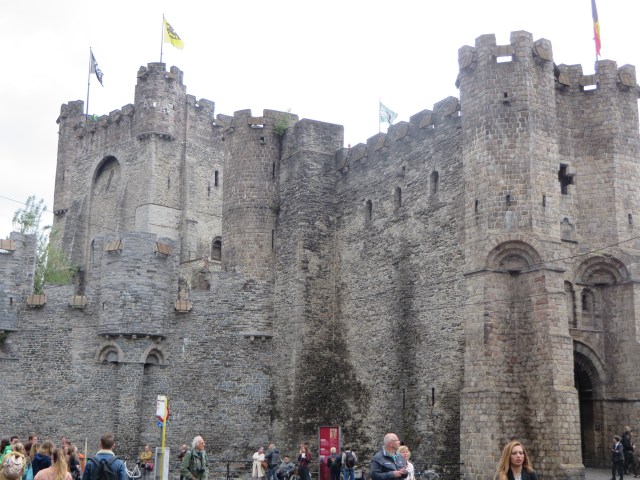 Built in 1180, it was the home of the Counts of Flanders until the 14th century. At one point in history the castle was used as a prison and it now houses a torture museum complete with various means of inflicting physical punishment. This brings up another whole subject——why do so many towns in Belgium and Germany have an obligatory “torture museum”? I mean, it seems like some places that perhaps never had a history of torture at all now have opened a museum catering to bloodthirsty tourists eager to see examples of the iron chair, the rack or the head crusher. Yikes!! But, I think this kind of stuff actually did take place at Gravensteen.
 First of all, Brest is not one of those places tourists usually flock to. For one thing, it rains a lot here, an annual average of almost 48 inches in fact. Still not a lot by Oregon standards (Eugene 46”, Astoria 67”) but enough to keep most fair-weather tourists away. Secondly, Brest was almost completed destroyed in World War II so there’s not much for tourists to see. Located at the very westernmost tip of France, this seaport town of 140,000 is blessed with an important harbor that began serving the French navy in 1631. Unfortunately, Brest’s strategic location has also been a curse, since it was also the home of a large German U-Boat base during World War II. This made Brest a primary objective after the Allied invasion at Normandy in 1944. The plan was to take Brest and then use the port to help supply the Allied troops advancing across France. But the occupying Germans had other ideas. It took the Allies over six weeks to finally take the heavily defended city and in the course of the battle, practically all of Brest was completely destroyed. Before finally surrendering, the Germans destroyed most of the port facilities, making it useless to the Allies. Today, Brest is the home of France’s main naval training centers and a base for its nuclear-armed ballistic missile submarines.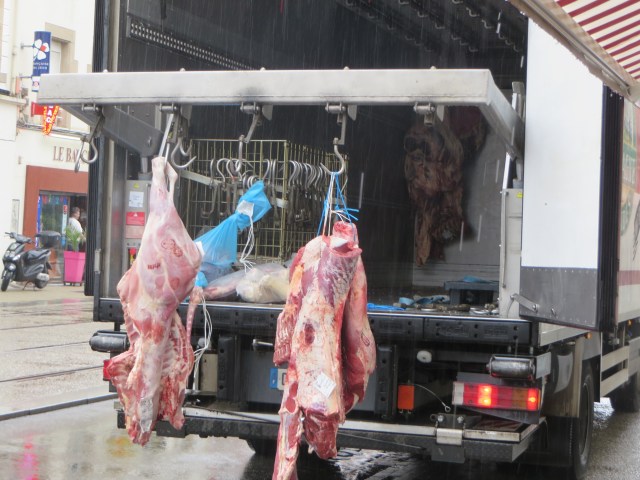
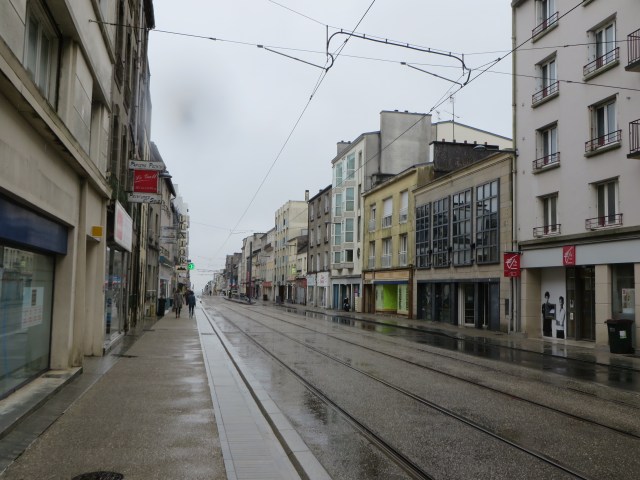
 For any of our readers old enough to remember, Cherbourg was the setting for the 1964 film, The Umbrellas of Cherbourg, starring Catherine Deneuve (The Most Beautiful Woman in the World). The movie was a smash, winning the Palme D’or at the Cannes Film Festival that year and the folks of Cherbourg have never forgotten it.
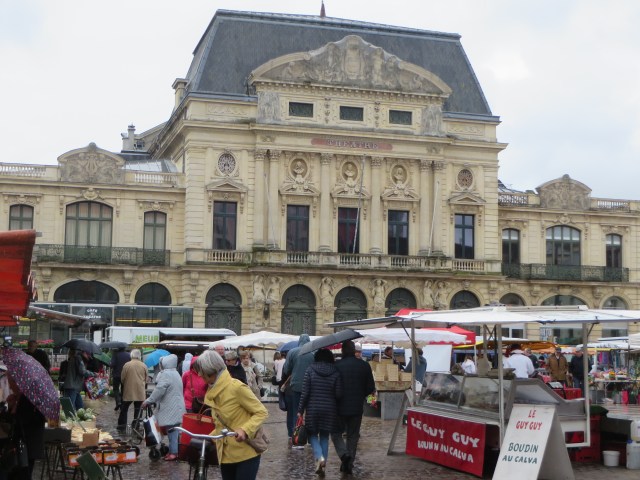
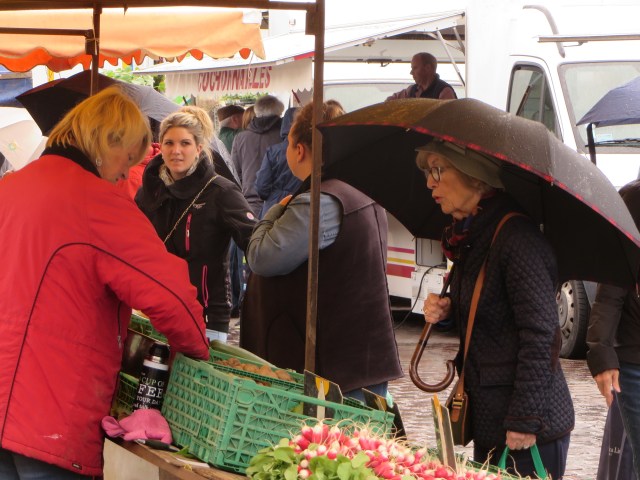
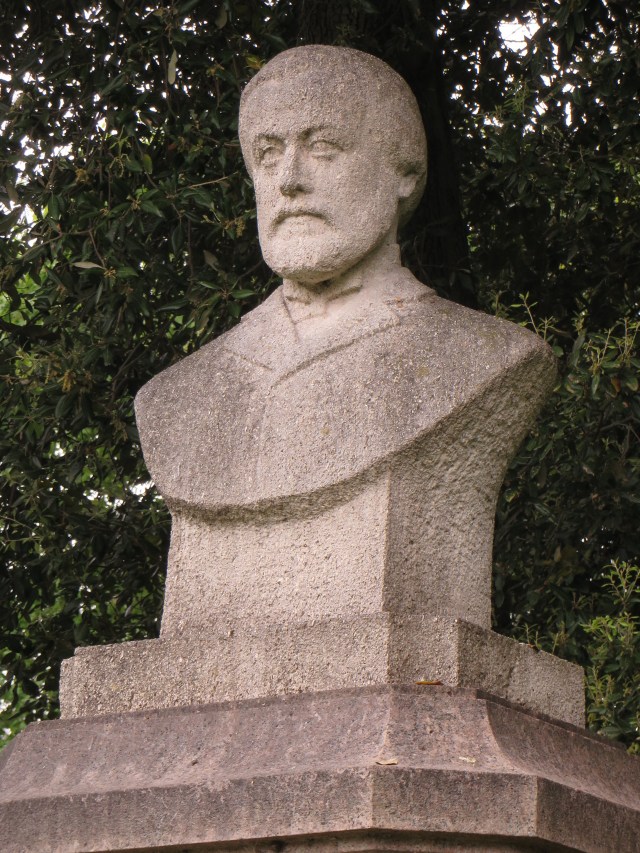
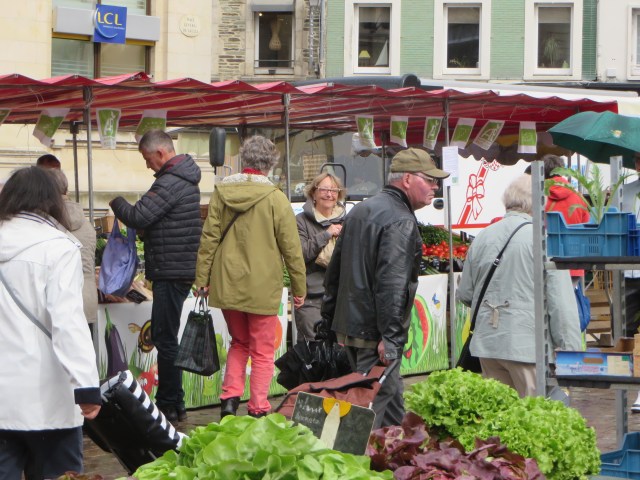 Wandering around town we discovered the Parc Emmanuel Liais. Mr. Liais was a former mayor of Cherbourg and dedicated much of his life to developing the grounds of this botanical garden.
  Naturally, Tanya was very excited about this place.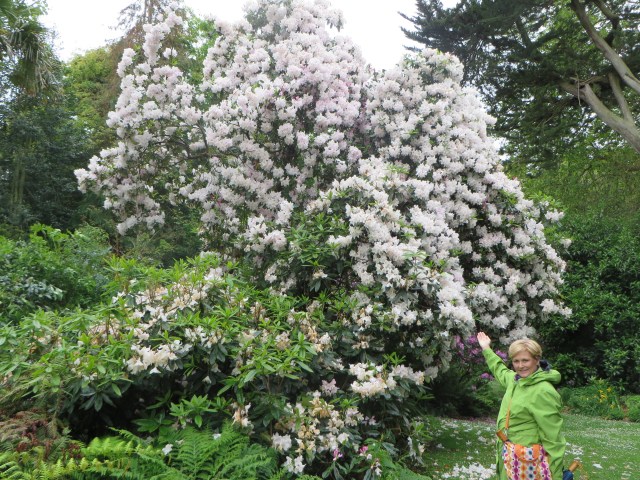


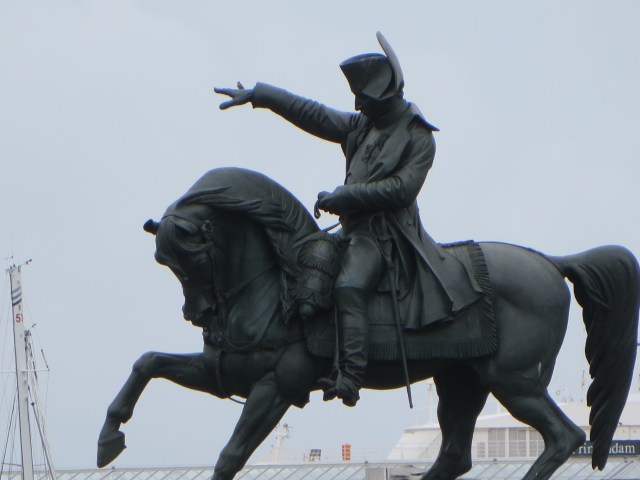 German bunkers still are in place along the shoreline.
  And, on the nearby city hall, we found this plaque dedicated to the memory of an American soldier, William F. Finley.
  We did a little research and found that on June 26, 1944, Sergeant Bill Finley had just celebrated his 20th birthday, one day before dashing under fire across Cherbourg’s main square to liberate the city hall, as part of the US Army’s 9th Infantry Division. Finley was from Decatur, Illinois and had joined the army in 1942 at age 17. He was later killed in action on April 1, 1945 in Germany, near Bad Kreuznach. He was just one of thousands of US soldiers who fought and died to liberate France.
 We can only hope that today’s leaders have learned something from the disasters of the past.









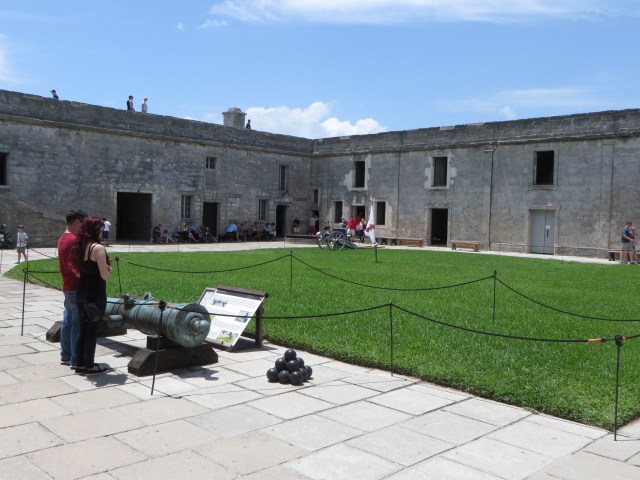
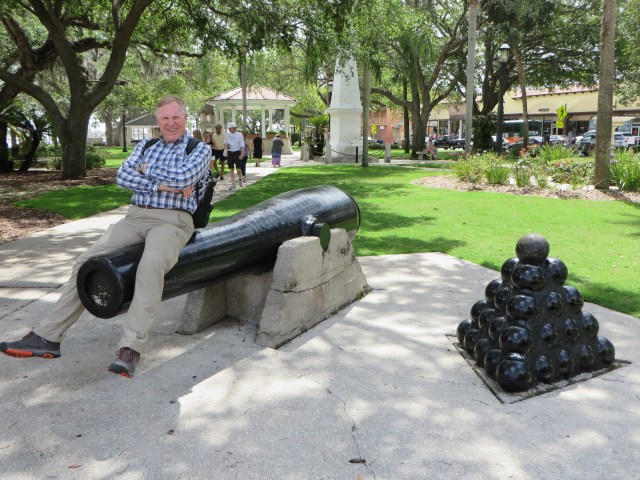
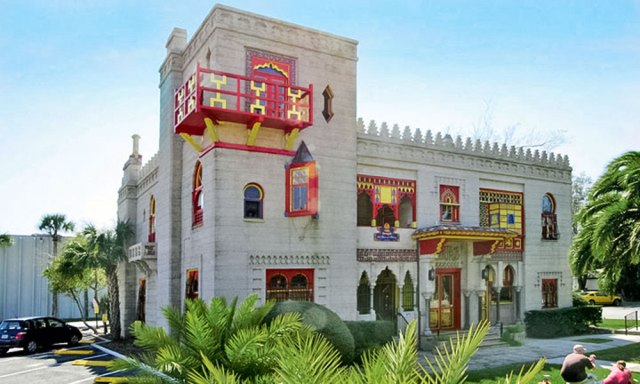 (source: Wikipedia)
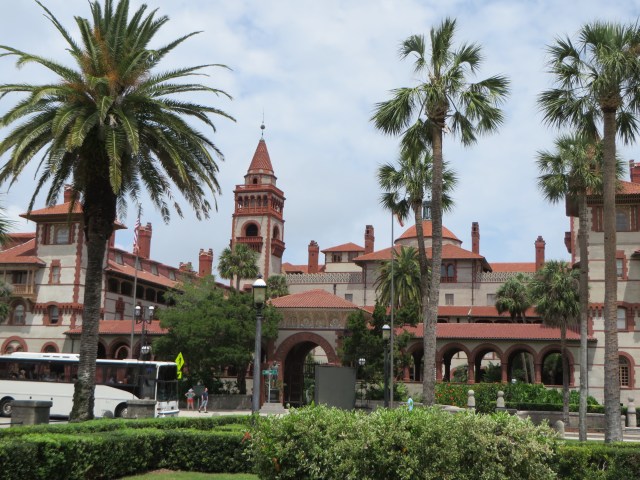 He wanted the hotel to be a resort designed as “an exclusive and opulent playground for the world’s most privileged elite”, according to the visitors’ brochure. To handle the overflow from the Ponce de Leon, he built the Alcazar hotel across the street, a place almost as grand.
 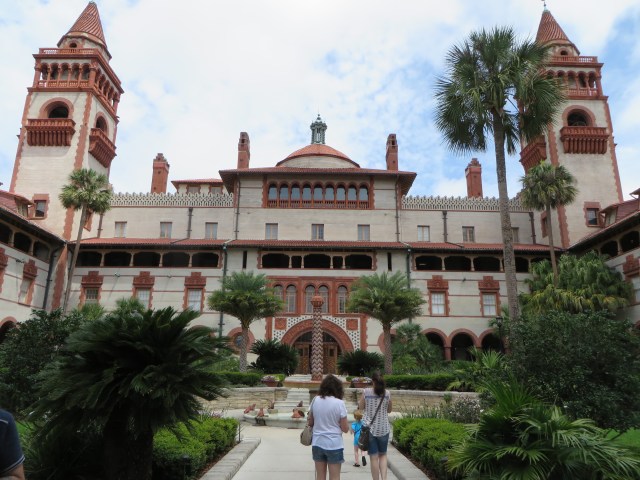 The Alcazar now houses a museum and the St. Augustine City Hall. Visitors are advised to leave their weapons at the door.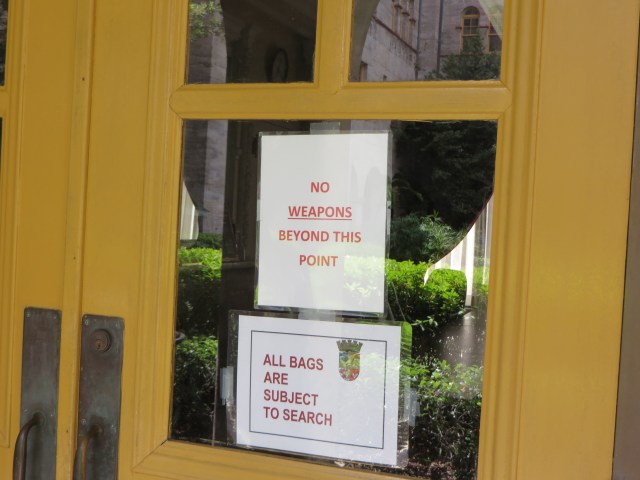
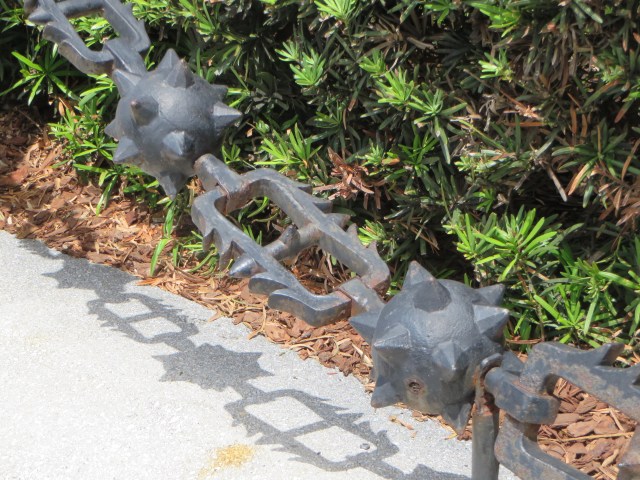
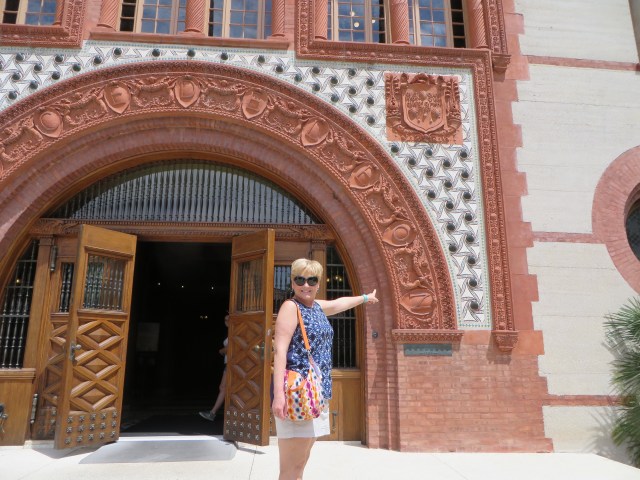 And, they don’t want any vagrants hanging around the sidewalk and sitting on the hedge.
 At the entrance to the college, there’s a very dignified statue of old Henry.
 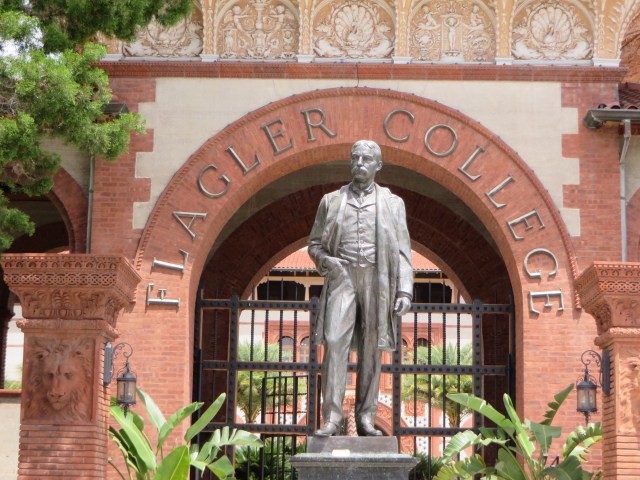 We couldn’t help comparing it to the statue of Emil Faber in the movie, Animal House: “Knowledge is Good”. Maybe the Animal House producers were thinking of old Henry when they made the film.
 This area is so massive that it really takes a full day to appreciate.


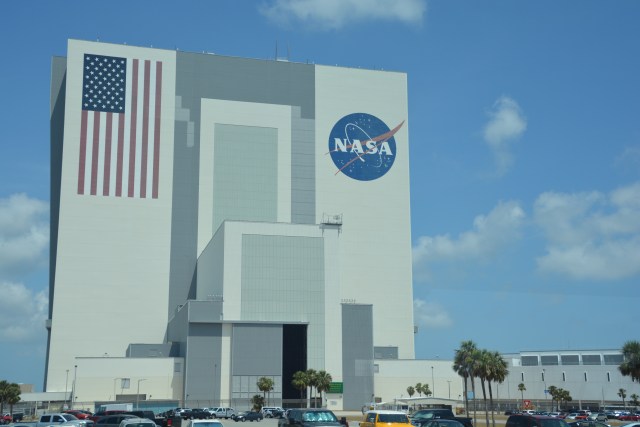


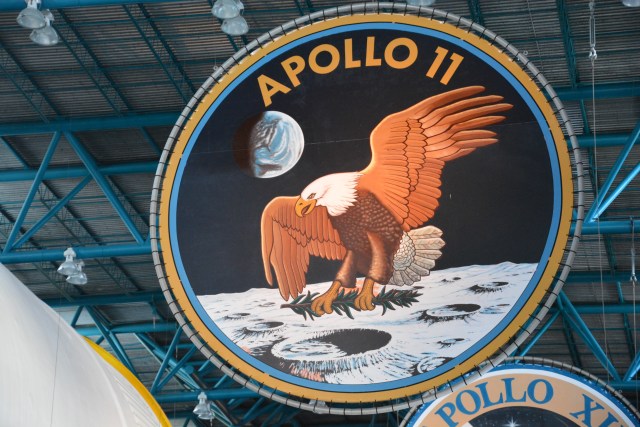


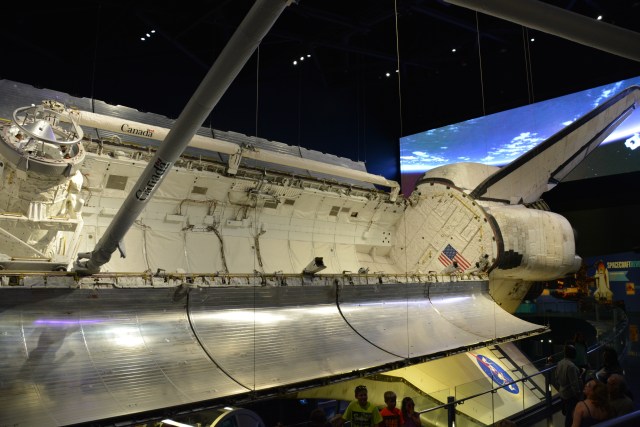


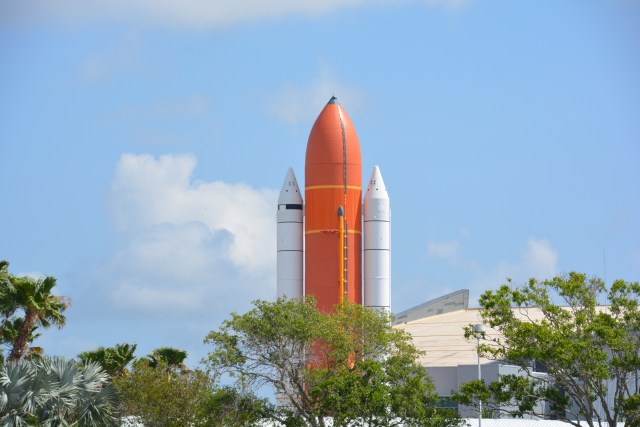 Normally, after the payload is about to be placed in orbit, these re-usable boosters drop off, re-enter the atmosphere and land in the ocean. That was the case in the space shuttle launches and the boosters then had to be recovered, an often tricky and dangerous phase of the operation.


 Never Left Home