Highlights of Jordan: Amman, Aljoun, Jerash

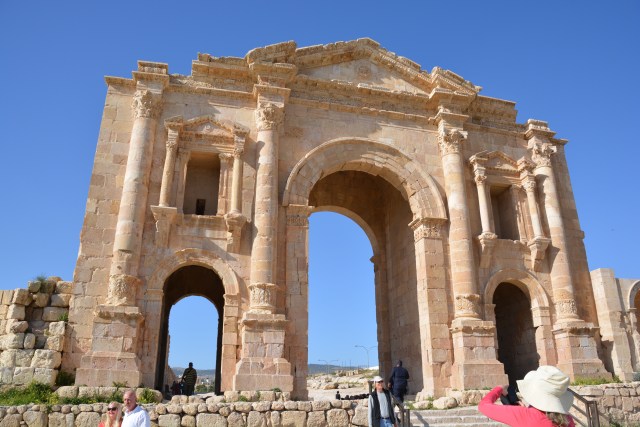
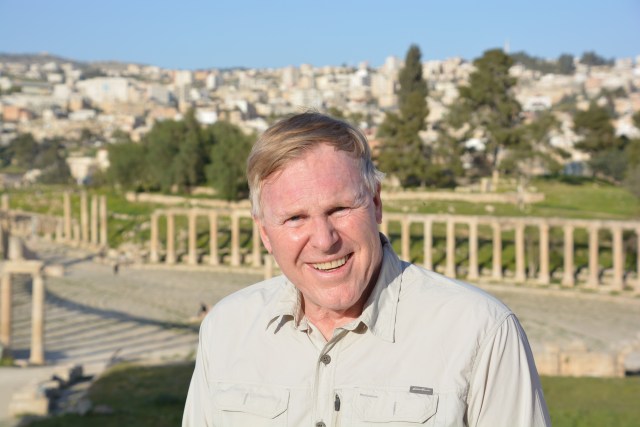
On “Jay and Tanya’s Insanity Trip 2017” we have often been asked, “which countries that you’ve visited would you like to return to?” One easy answer to that question is “Jordan”. OK, we were only here two days and one of those was spent at Petra, with hundreds of other visitors, so we don’t have a wealth of travel knowledge of the country. But, our second day was spent exploring Amman, the capital, and two other amazing places in the northern part of the country, Aljoun and Jerash.

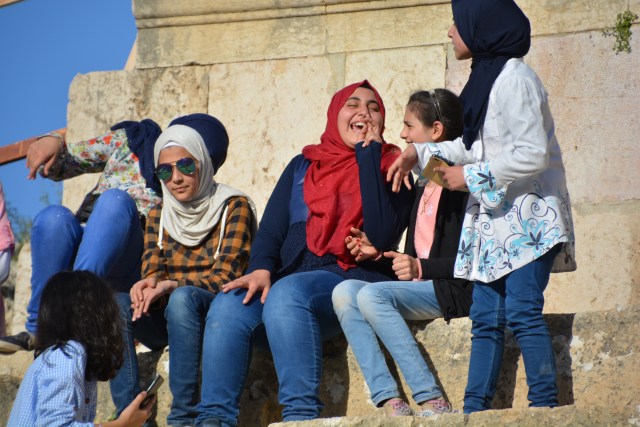
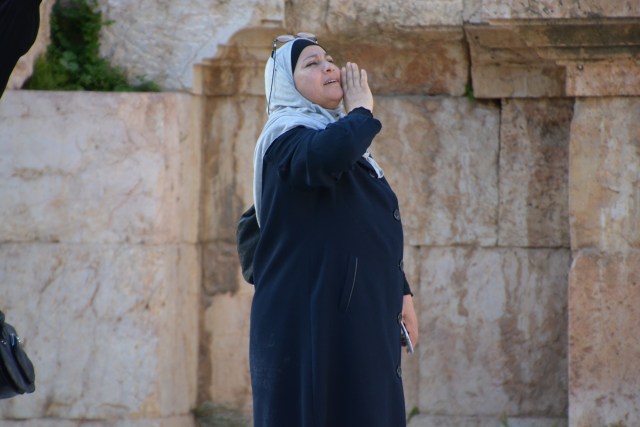
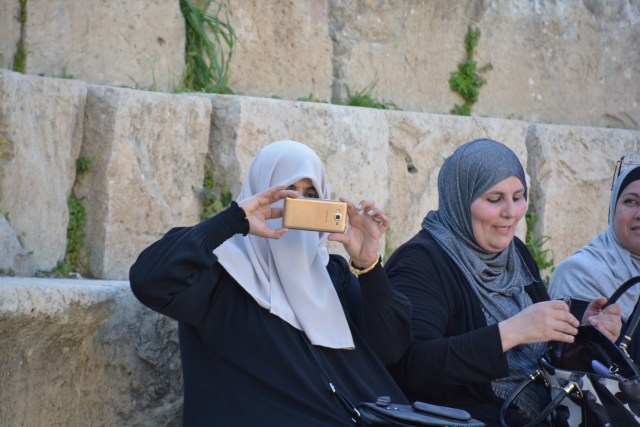
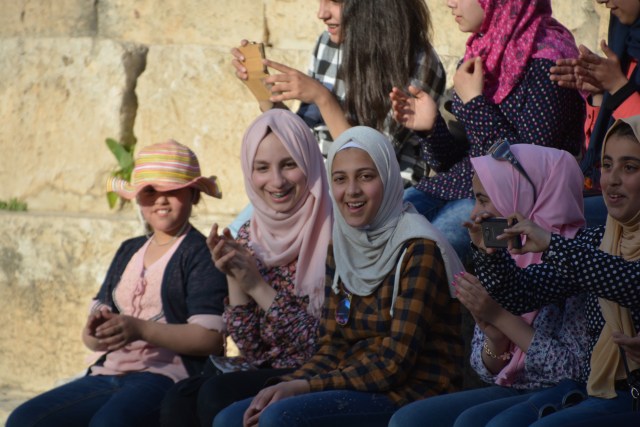
Something we had never thought about is that Jordan is really a pretty poor country. Unlike many other countries in the Middle East, it has no oil or natural gas deposits to speak of and must rely heavily on agricultural exports. But the thing that impressed us the most about Jordan was the friendliness and heartfelt joy of its people. Our visit to Aljoun castle in the Jordan Valley was on a Wednesday, which is the day allocated for schoolgirls for field trips. Tuesday is reserved for boys. Jay and Tanya felt like movie stars as girls asked us to have our picture taken with them and we noticed that their cameras on selfie sticks were conspicuously pointed at us as they politely said hello and “how are you?” Jay then asked if he could take their picture and they quickly obliged.

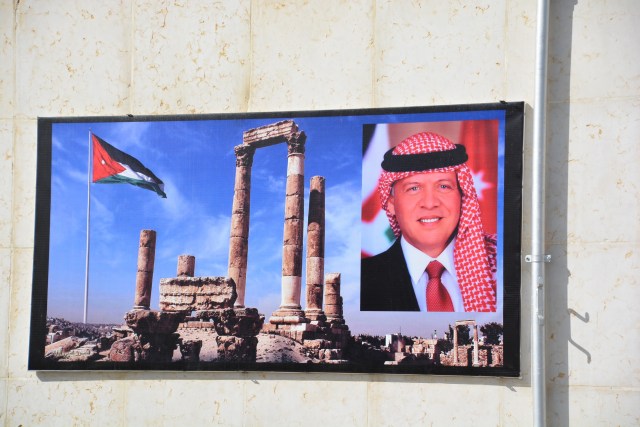
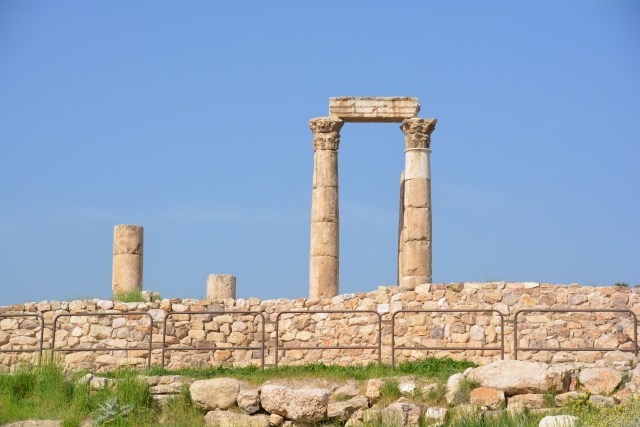
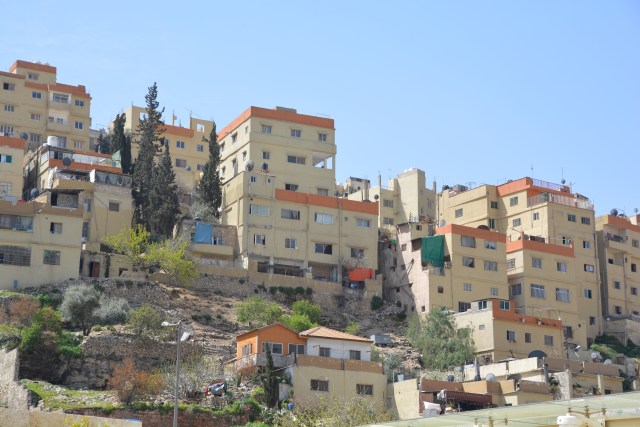
Amman, is a huge modern city, originally built on seven hills but now spreading across the countryside. It has several important archaeological sites from both the pre-Christian and Roman eras. Throughout Amman, as well as the rest of Jordan, we found images of Jordan’s hugely popular King Abdullah II. DSC_0002DSC_0004DSC_0006DSC_0008DSC_0011DSC_0027

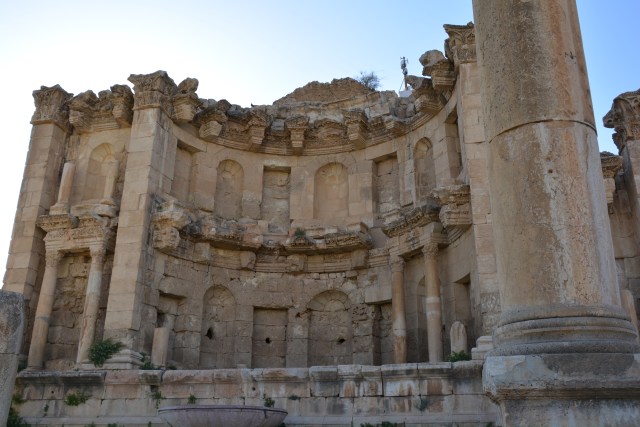
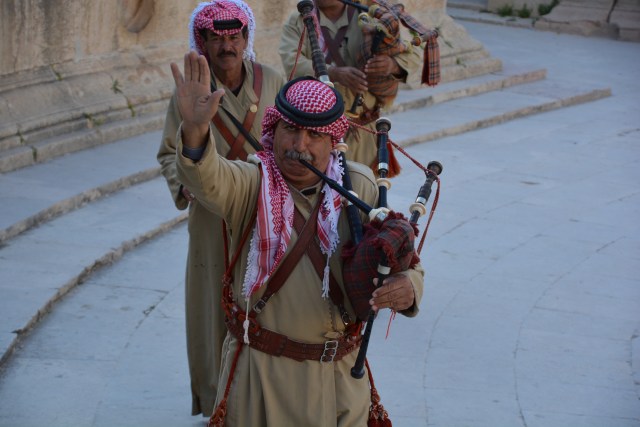
Our final stop was at the site of the ancient Roman city of Jerash. Jerash is reputed to have the best preserved Roman ruins in the world. One of our highlights was a performance by some colorfully costumed bagpipers who played for the crowd in the ancient Roman amphitheatre. DSC_0043DSC_0047DSC_0053DSC_0059DSC_0061DSC_0066DSC_0068DSC_0071

We’re definitely looking forward to our next visit to Jordan. DSC_0078.jpg

Posted in Jordan, Middle East | Leave a comment

Petra: Bucket List Travel

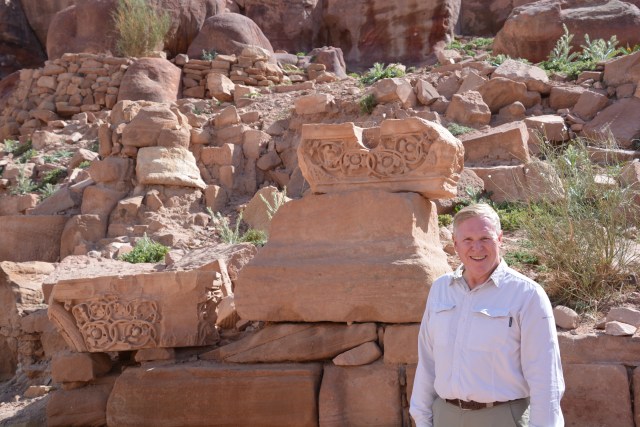
The ancient city of Petra, Jordan is one of those bucket list places that show up on virtually every travel junkies wish list. It’s in the same category as India’s Taj Mahal, Peru’s Macchu Picchu and Rome’s Coliseum. But like many people, we had no idea of Petra’s background or what it really was, besides seeing it in lots of travel photos and with Indiana Jones. And nothing prepared us for the experience of the 45-minute walk along the ancient roadway and through the weather-worn canyons culminating with the massive Treasury or Al Khazna that defines Petra. Fortunately, visitors to Petra can pick up a handy brochure describing the city and its highlights.

First, a little background on Petra. Although it’s not known exactly when the city was built, historians know that it was the capital of the Nabatean Empire during the period of the first century BC and that it was an important trading center. The Romans took over the city and it continued to prosper until a huge earthquake in 363 AD destroyed most of it. This led to a gradual downfall of the city until it was abandoned sometime during the middle of the seventh century. It was largely forgotten for the next 1,000 years and was known only to local Bedouins until a Swiss explorer, Johannes Burkhardt, “rediscoverd” Petra. It has attracted visitors ever since.

Today, there is a large, upscale visitors center where hundreds of people enter daily, many after getting off tour buses parked in lots nearby. After shelling out roughly $70 for the entrance ticket people begin the 2.7 mile trek, sometimes using donkeys or horse-drawn carriages, through the site. Meanwhile, sheep-herders go about their usual business. DSC_0004.jpg

The road is rocky  but soon you reach the Bab Al Siq, or gateway to Petra, which is a series of tombs carved into the rock in the first century AD.

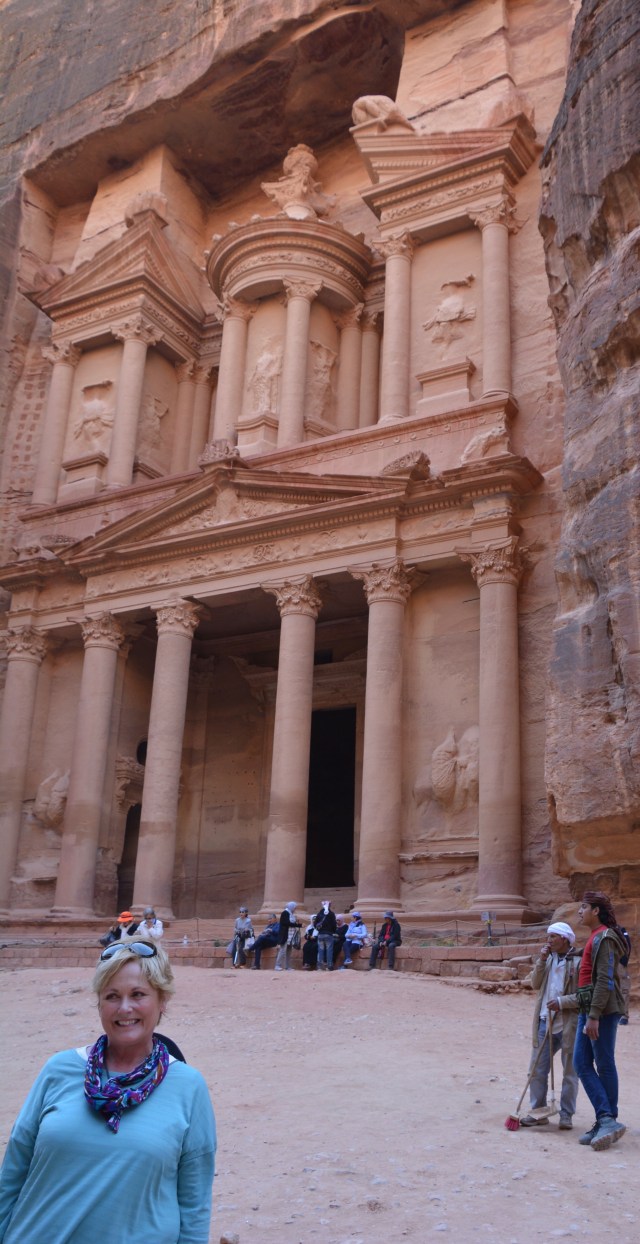
From there, you wind your way through the narrow gorge for one kilometer until, peeking through the gorge is the Treasury, or Al Khazna, the main attraction of Petra for most people.

The Treasury isn’t really a treasury at all, but rather what is believed to be the tomb built for a Nabatean king in the first century AD. It got the name of “Treasury” because it was once thought to contain a king’s treasure. After watching the Indiana Jones movie featuring Petra, you would think the Treasury is the gateway to an ancient city but it’s not. Behind the gateway is simply the rest of the mountain the massive Treasury facade was carved from. Once you’re there, you can take a camel ride if you’d like. These guys seem to take all the crowds in stride.

For many tourists, after seeing Al Khazna they start heading back to their tour buses. But for those who want more there’s still over a mile of walking. Along the way, there’s the Street of Facades, a row of Nabatean tombs carved into the mountain.

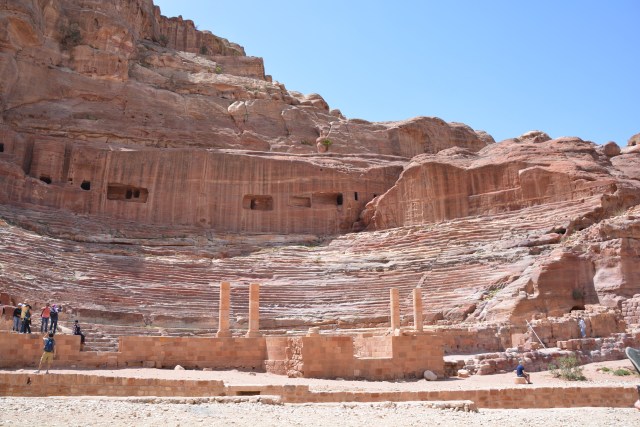
Finally, there’s the Theatre, carved into the rock, which could accommodate 4,000 spectators DSC_0066.jpg

There’s more to Petra than we’ve covered in this posting, but you get the idea. Here’s hoping it’s on your bucket list and that you get the chance to go there. DSC_0063DSC_0083DSC_0089(0068,0083,0089)

Posted in Jordan, Middle East | 3 Comments

Muscat, Oman

The Sultanate of Oman was a welcoming introduction to the Middle East for Jay. Tanya had lived in the region 30 years ago but for Jay, other than a previous visit to Israel, it was a new destination. To appreciate Oman, you need to suspend, at least for a bit, your preconceived ideas of how a successful society should operate.

First of all, forget about Western ideas of democratically elected leaders. Oman is an absolute monarchy run by His Majesty Sultan Qaboos, who took over in the early 1970s after staging a successful “bloodless” coup against his father. The Sultan, now 76, has his name and image plastered all over the country and there’s no doubt who is in charge here. Every town of any significant size has a Sultan Qaboos Mosque and his picture is on every denomination of Omani currency. He is simultaneously the head of state, defense minister, foreign minister, finance minister, and head of police. There is a sort of parliamentary advisory group, appointed by the Sultan, but his will is what counts. DSC_0031

As you might imagine, this is a very efficient system of government. The capital, Muscat, is very clean and orderly because this is the way the Sultan wants it. Every car is sparkling because the Sultan doesn’t like to see dirty cars and it is against the law if one’s car isn’t clean. Our guide told us there is no conflict between the different Islamic groups because the Sultan has decreed that anyone who speaks ill of any other group goes to jail. On our 2-hour trip outside the capital we saw evidence a few large detention centers so we assumed violating the Sultan’s wishes have consequences. At least half the country’s population is made up of foreign workers, but Omanis are not allowed to marry foreigners. Their non-Omani marriage partners are limited to a few nearby countries, including UAE and Saudi Arabia. This obviously helps the country maintain a certain level of stability and homogeneity.

As Westerners, an absolute monarchy may seem a bit harsh. But, for a strict Islamic society, it seems to work out just fine, especially if you’re male. Again, according to our young guide, when he is ready to marry, the government will give him land, build a house for him and make sure his financial needs are taken care of. This kind of governmental largess probably doesn’t hurt the Sultan in maintaining his position. The Sultan has no children but recognizing that he can’t live forever, he has made provisions to name his successor, one of two cousins. Upon his death, the army immediately takes “temporary” control of the government and gives the cousins three days in which to decide which one of them will become the new Sultan. If they can’t decide within this time, the army will decide for them and name the new Sultan. Neat, clean and orderly, just the way Omanis like it. By contrast, Western democracy is such a messy system.

Posted in Middle East, Oman | 5 Comments

Incredible Mumbai

Since our last posting on Ho Chi Minh City (Saigon), Jay and Tanya visited a friend in Singapore, shopped in Klang, Malaysia and shared drinks and conversation with the Sri Lankan branch of our family in Colombo. It was an unforgettable week. But more was to come as we spent two days in Mumbai, India.

It has been said that India engages all of one’s senses simultaneously. And that is certainly true of the country’s largest city, Mumbai. With 23 million people and representing 6% of India’s economy, we found ourselves pleasantly bombarded with the sounds, smells, visual and physical input that is Mumbai. Extreme poverty and wealth converge here, religions blend, and ethnic groups mix in this garam masala of a city that has transformed itself in recent decades into the financial, entertainment and cultural capital of India.

Tanya had never been here and Jay’s last visit was in 1982, when he spent a few days attending the Bombay Jazz Festival. Tanya was a little apprehensive about our visit and Jay’s memories were of constantly being surrounded by beggars and small children literally grabbing at his pants pockets. Walking along the promenade, Marine Drive, at night he recalled seeing massive amounts of people living and sleeping alongside the street. Outside his hotel, the Sea Green, people slept on the steps outside the lobby, as well as in the hotel’s hallways. It was an unforgettable introduction for Jay as to how most people in the world live, compared to the luxury of living in the West.

What a difference now from that visit 35 years ago! What was once the squalid Marine Drive walkway is now a beautifully maintained pedestrian thoroughfare. Litter police regularly patrol on foot and promptly fine anyone who so much as drops a candy wrapper on the ground. The Sea Green Hotel is still there, not far from the cricket grounds where Jay attended the jazz festival years ago. But no one is sleeping on its outside steps. IMG_3062
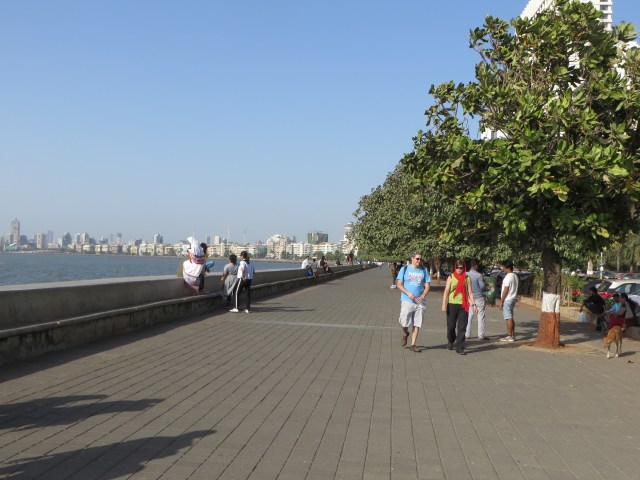
Of course, there is still the wide disparity between the haves and have-nots, and there are many millions more people here than in 1982. People at the bottom of the economic scale have been forced to move further out from the urban core as downtown property prices have skyrocketed. But the city seems to have changed for the better. There are still those who are completely homeless and live in the streets. But for the 60% of the population living in what are unashamedly called “slums”, the lifestyle, while unbelievably low by Western standards, is not regarded as unacceptable in Mumbai.

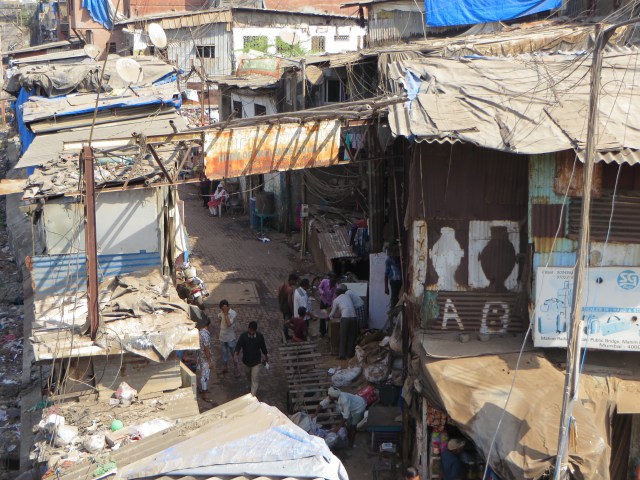
With our guide, Rahul, Tanya and Jay rode on the local Mumbai train for the 35 minute trip to visit Rahul’s neighborhood, the Dharavi slum, home to 1.2 million people and covering over 100 acres.

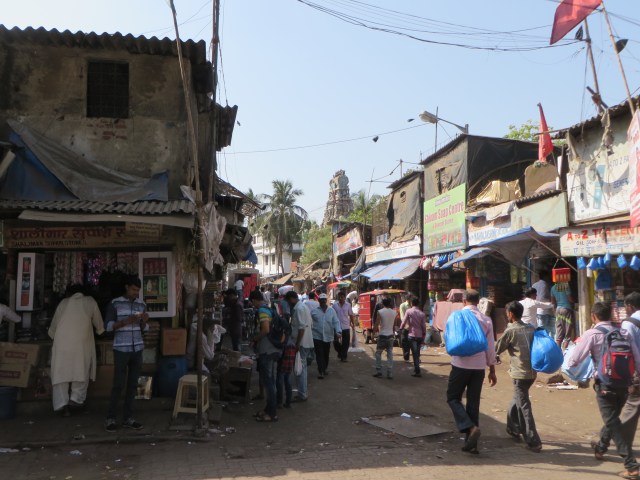
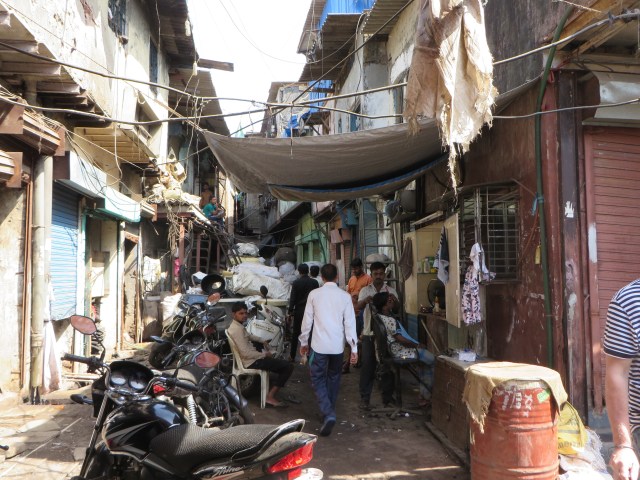
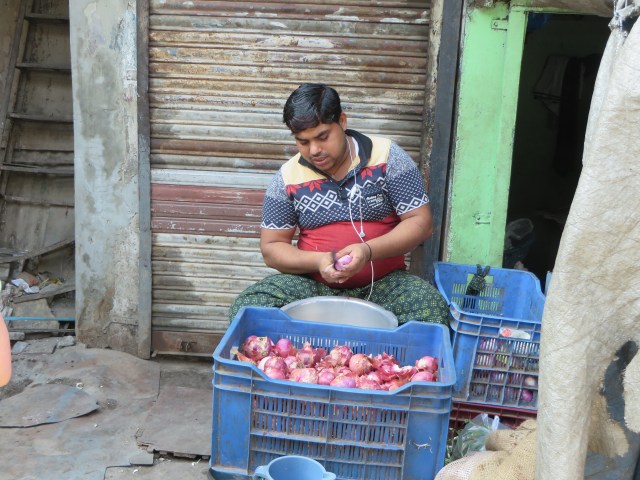
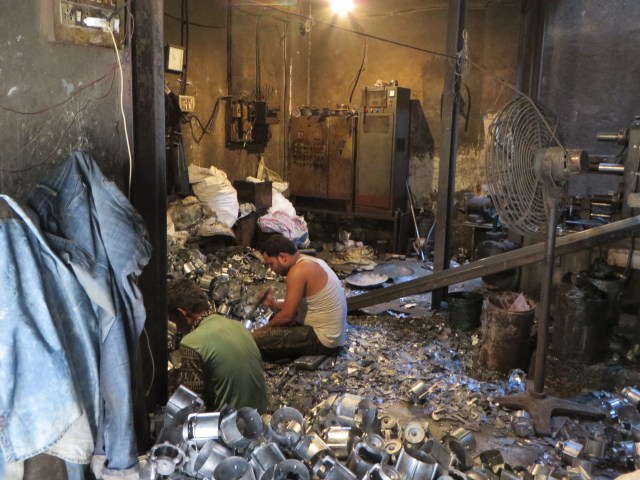
Dharavi is organized into two distinct areas, residential and commercial. Portions of it were used in the film, “Slumdog Millionaire”. While it was impossible for us not to feel a certain sense of voyeurism, at no time did we ever feel unsafe or any antagonism from Dharavi’s residents. We were never approached by beggars and we were either greeted with smiles and hellos or just simply ignored as people went about their daily lives. It also didn’t hurt that Rahul was from the “hood”. Our picture-taking was kept to a minimum, with an unobtrusive small camera, and limited to the commercial section of Dharavi.
IMG_3086IMG_3089IMG_3093IMG_3094IMG_3100IMG_3101IMG_3102IMG_3104

Like any metropolis, Mumbai has its “must see” sights: Dhobi Ghat, Gateway of India, Chhatrapati Shivaji Terminus, Bombay University, Mahatma Ghandi’s home, the Hanging Gardens and Chowpatty Beach.

Dhobi Ghat: One of several public laundry sites in Mumbai, this 23-acre “ghat” is where laundry from schools, hospitals and other government facilities is washed on a daily basis. The washing stations or flogging stones are passed on from generation to generation as the “dhobis” or laundrymen continue this occupation that has continued for over 100 years. IMG_3052

Gateway of India: This arch was built to commemorate the visit of King George V and Queen Mary when they landed in India in 1911. IMG_3065

Chhatrapati Shivaji Terminus: Also known as Victoria Terminus is the central train station in Mumbai. From here, you can take a local or long-trip train on the Central Railways of India. An average 2.5 million people pass through this station every day. IMG_3071

Bombay University: Patterned after English universities and the tower of Big Ben in London, this British-built campus is now used for administrative functions.

Mahatma Ghandi’s home: Ghandi, the father of modern India, lived here for 17 years, from 1917 to 1934, and this modest building contains his library, personal items and a series of dioramas depicting key events during his lifetime. IMG_3054

The “Hanging Gardens”: This garden area overlooking Mumbai’s central skyline has a fascinating history. Officially known as the Pherozeshah Mehta Gardens, it is built above a large water reservoir. The Parsis were a group of enterprising Iranians who came to India in the 19th century and lived in this area. Their religious beliefs prohibited burial or cremation of their dead. Instead, bodies were hung from trees near the then open air reservoir and offered up to crows and vultures. The birds were not always very tidy and often dropped bits of human flesh into the reservoir. Since the reservoir provided most of the drinking water for the city, the Bombay officials were not too pleased and ordered the community to stop or move their practice of body disposal elsewhere. In 1882, as a compromise, a wealthy Parsi businessman offered to cover the reservoir and build gardens above it. The city agreed and the garden is now a popular site for visitors and Mumbai residents. Incidentally, the crows and vultures still carry out their duties in an area adjacent to the park. IMG_3055IMG_3059

Chowpatty Beach: The primary attraction is the pedestrian walkway along the beach, rather than using the beach for swimming or sunbathing. The problem, of course, is that much of Mumbai’s sewage and overall trash finds its way into the Arabian sea along the beach.IMG_3058

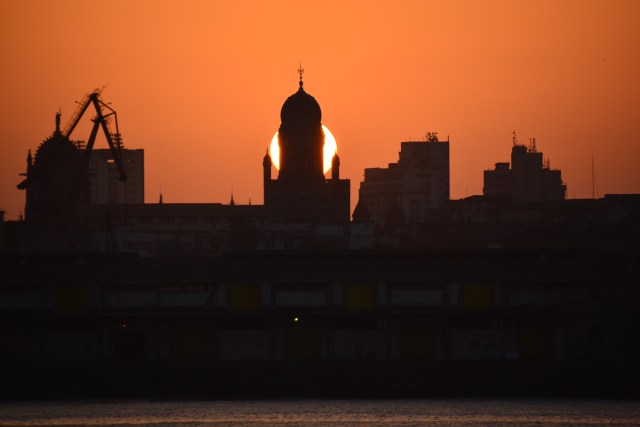
So, what was our conclusion after this short visit? We will definitely visit this amazing city again, next time as part of a trip exploring some of the rest of incredible India. DSC_0014
Posted in Asia, India | 1 Comment

Saigon: 23 Years Later

Late in 1994, Tanya and Jay took one of the most memorable trips of their lives, a 16-day bicycle trip through Vietnam. We were joined by six other maniacs and were led by two 20-something guides from Berkeley, who at times admitted they’d never been to some of the out-of-the-way places we visited. It was a simpler time in some ways for Vietnam. There was no internet, no smart or cell phones. Digital cameras were in their infancy. The US had no diplomatic relations with Vietnam and we had to get our “stapled-in” passport visas through either Mexico or Canada. As white-skinned Westerners we were an oddity as we cycled through the central highlands and stopped in places like Dalat, Pleiku and Bien My Thuot (sp?). Groups of youngsters would run beside us, asking the often-heard questions: “Where you from?”, “Where you go?” and “What’s your name?” In our home, Jay still has a framed photo taken of him surrounded by kids looking on in curiosity and amazement as the polaroid picture he had just taken of them begins to develop. It was a trip to remember. Vietnam in 1994 was just beginning to re-emerge into the world’s consciousness, but not as a place associated with war and suffering, but as a hopeful engine in the already fast-growing Asian economy.
Our 1994 trip began in Saigon (Ho Chi Minh City) and we were able to spend a couple of days there before mounting our Trek hybrids and cycling north. Tanya’s most vivid recollection of the city was that of a chaotic traffic mess, with mostly bicycles competing with a few motorbikes and cyclos. Pedestrians were pretty much on their own and had to take a zen-like attitude as they simply plunged into the swarming mass to cross the broad Saigon streets. Anyone on foot who thought they might wait until traffic thinned was destined to spend the rest of the afternoon waiting on the corner.

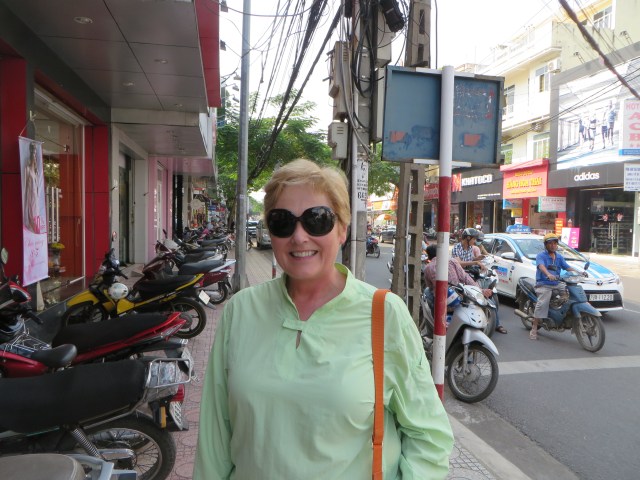
IMG_3012So, what a surprise we both had when we visited the city this time. The bicycles have been replaced by motorbikes, there are now lots of cars, and traffic is still very heavy. But now, instead of what before seemed like a giant free-for-all, there was a distinct pattern of organization. Now, it could be that in 1994, the traffic was still organized and as Saigon neophytes we just didn’t recognize it. But today, crosswalks are very common and there are lots of pedestrian walk/don’t walk lights. One still needs to adopt a cautious but steady and aware attitude when crossing boulevards but it just wasn’t the chaos we remembered.
IMG_3015IMG_3010IMG_3019IMG_3007IMG_3028IMG_3030IMG_3032

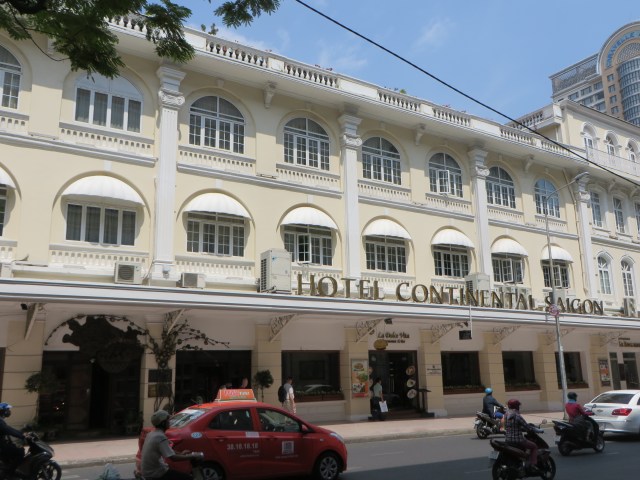
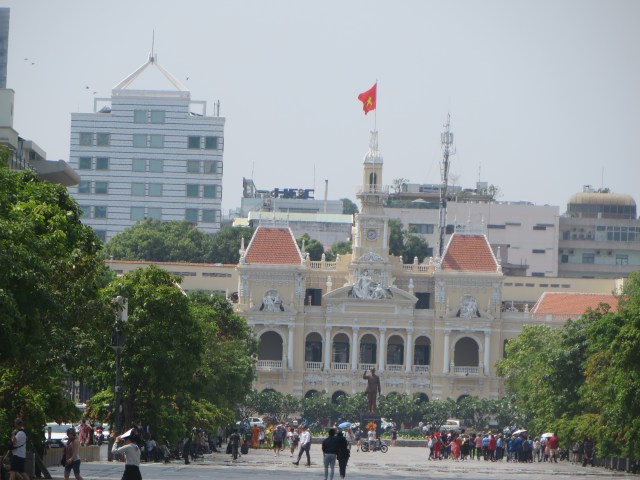
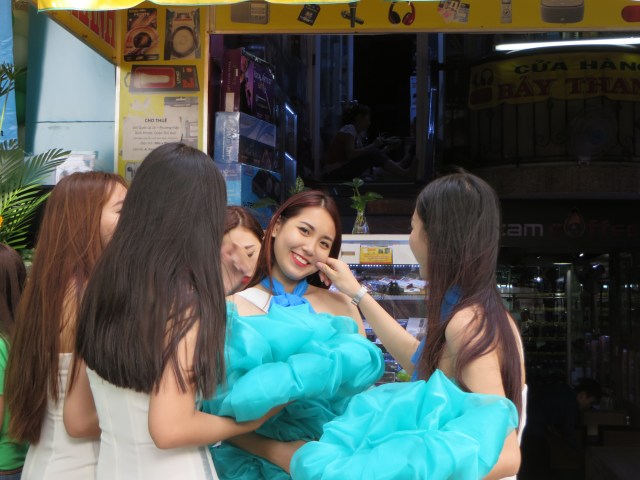
Of course, Saigon has changed dramatically since we were last there. Some landmarks remain, like the Continental Hotel, the Notre Dame Cathedral and the French-designed city hall. But the old Rex Hotel is recognizable only by its name and skyscrapers cover the downtown. Marble and glass business buildings house tenants found in any major city: Nike, Intel, Samsung, etc. Fewer young women wear the traditional ao dai and young people, in general, are dressing in a more casual and universal manner. The city will be getting its first subway line next year and this place is clearly moving full speed ahead, anticipating more growth. Saigon is an exciting city and we look forward to re-visiting soon.

Posted in Asia, Vietnam | 2 Comments

Hong Kong Highlights

DSC_0010Writing about Hong Kong as an exciting, exotic pearl of the East is like writing about Paris as enduringly romantic and beautiful. Both statements are true and almost anything written about either city becomes practically a cliché and hopelessly repetitive. So this posting concerns a few gems of practical information based on our recent visit. We hope it will be useful for both long-time and first-time visitors.
Looking for good dim sum: Dim sum are these delicious little steamed dumplings filled with bits of pork, shrimp, etc. usually served for breakfast or lunch. Hong Kong is famous for this culinary delight and Jay, especially, loves them. Forget about the high-priced, touristy Jumbo floating restaurant for your dim sum. Instead, head for Hau Fook Street on the Kowloon side. This little street parallels Granville Road and Cameron Road and is a short walk east of Nathan Road in the popular Tsim Sha Tsui district. There a number of little restaurants on this street and you may find yourself sharing a table with others in this no-nonsense local worker and shoppers area. Don’t worry about what to order. Menus usually come with pictures and often are in English as well as Chinese.

A Quality Museum Experience: On the Kowloon side, head up Chatham Road South to the Hong Kong Museum of History. Admission was free on the day we visited and the state-of-the-art museum gives an overview of the history of Hong Kong from pre-historic to modern times. Rather than dwelling on the colonial history of Hong Kong, the exhibits center on who the various people and tribes were, and are, that have inhabited this area for the last 4,000 years. Next door is the Hong Kong Science Museum, a popular destination for school kids.

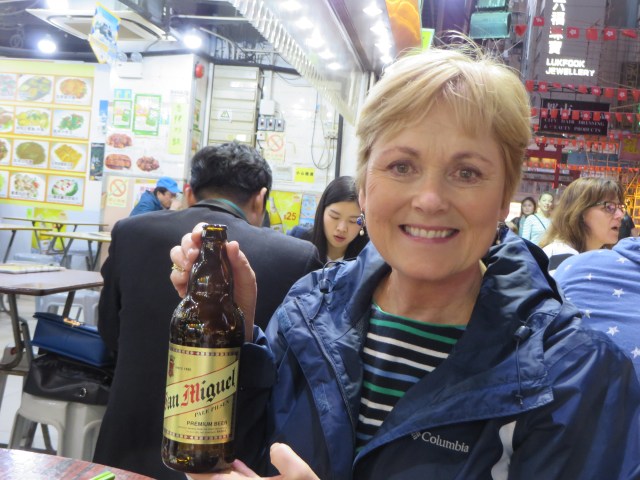
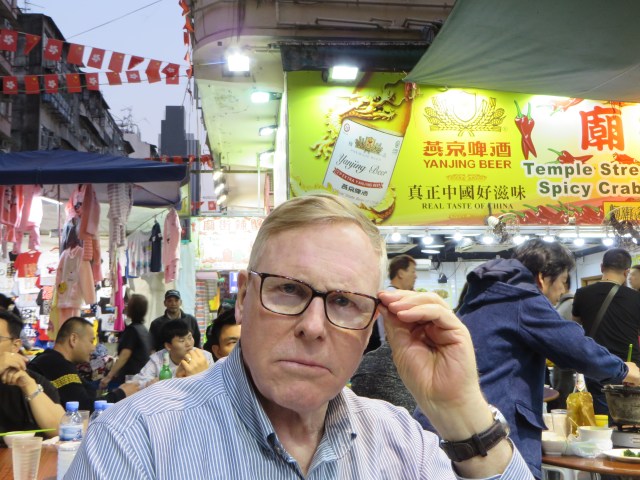
Temple Street Night Market: This is a perennial favorite for visitors and locals trying to pick up bargains on “stuff”. But, for us, we always enjoy eating at one of the outdoor restaurants here, like “Spicy Crab”. Sitting on little plastic chairs and being handed a roll of toilet paper to use as napkins, places like this are a wonderful place to enjoy dining al fresco, enjoying a cold local beer and rubbing elbows with locals and fellow travelers.IMG_3002IMG_3003

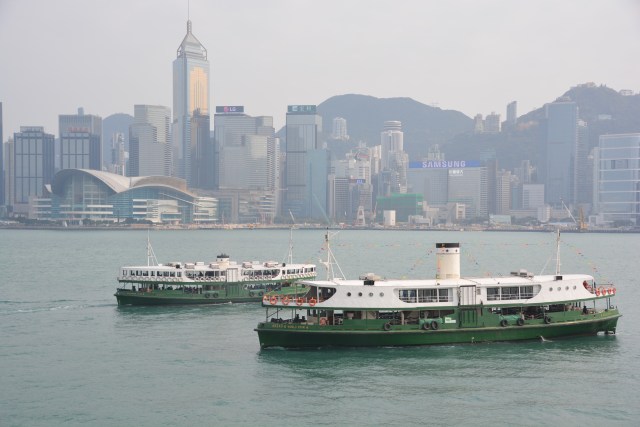
Hong Kong Tram: Take the venerable Star Ferry (still just 27c per trip) over to the Hong Kong side and walk a few blocks along the overhead pedestrian walkways to Des Vouex Road Central and catch the old double-decker tram. The tram lumbers along an east west route, roughly paralleling the northern shoreline. We took the North Point tram and followed its route all the way to the end, where it then made a turn and headed back toward Central. Forget the on/off busses and expensive tours. For about 35c you can ride all day and see a variety of neighborhoods where you won’t see any non-Chinese faces.

There are your Hong Kong travel tips for today. Have a wonderful trip!

Posted in Asia, China | 3 Comments

Zhujiajiao, China

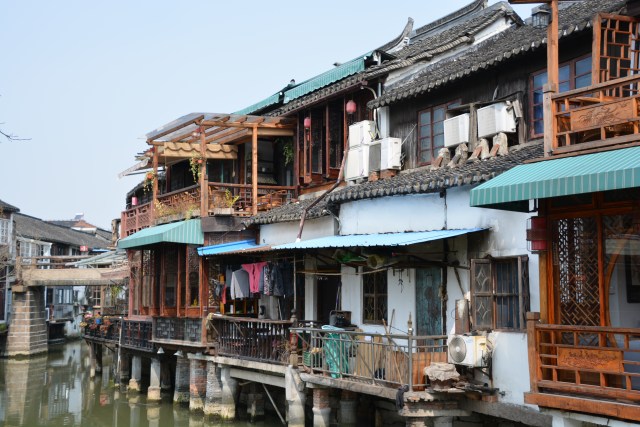
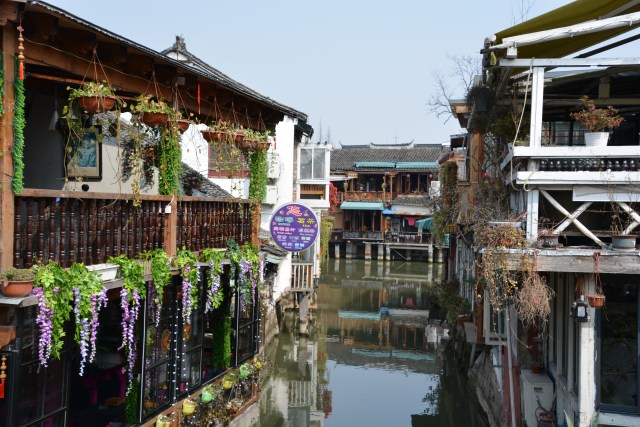
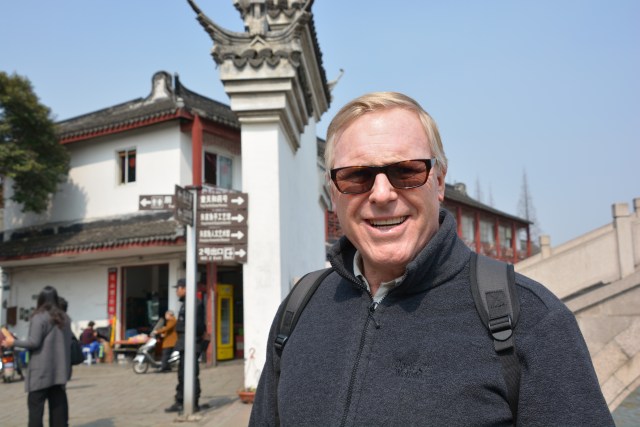
About a 90-minute drive from central Shanghai is the traditional “water town” of Zhujiajiao. dsc_0022At the risk of generalizing, there are a number of these type of towns in southern China, most notably Suzhou, whose Chinese garden coincidentally served as the model for the Chinese garden in Portland, Oregon.
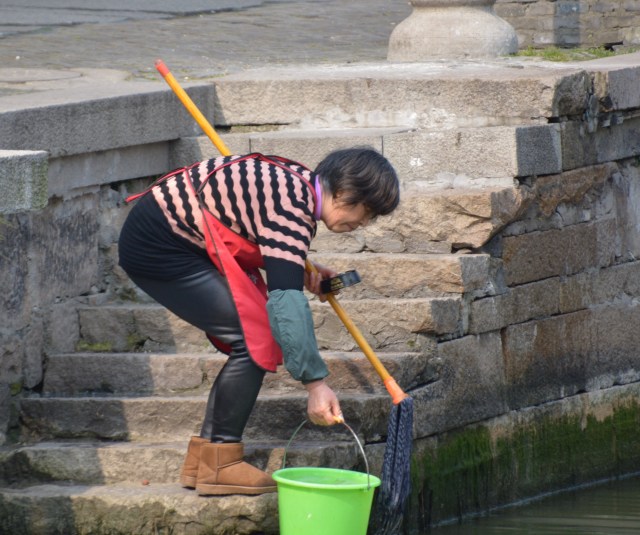
Of course, these towns represent a way of life that is quickly disappearing in many parts of China, but people do actually live and work in them. They have become a huge tourist attraction for both foreigners and Chinese, so much so that the authorities in Zhujiajiao have set a daily limit of no more then 35,000 visitors. Tanya even volunteered to help enforce these limits. dsc_0028

Tourists jostle one another as they negotiate the narrow stone streets and sidewalks, while vendors encourage them to buy local food items, silk scarves and gee-gaws. Still, it was a fun experience, which included a visit to an old pharmacy, selling a number of traditional herbal remedies. dsc_0023dsc_0024dsc_0025dsc_0029dsc_0030dsc_0032dsc_0036dsc_0038dsc_0042


Posted in Asia, China | 7 Comments

Shanghai Revisited

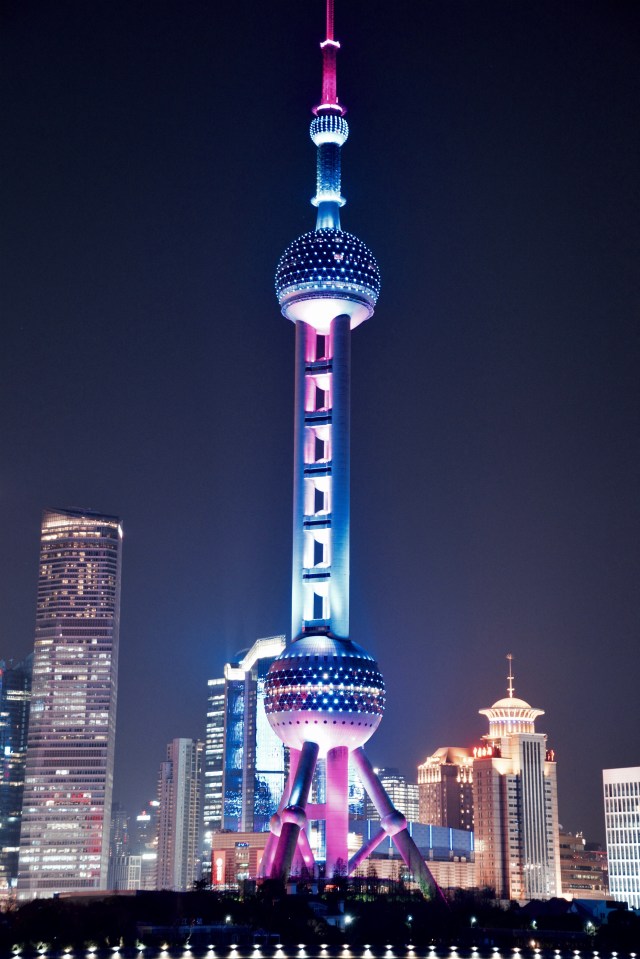
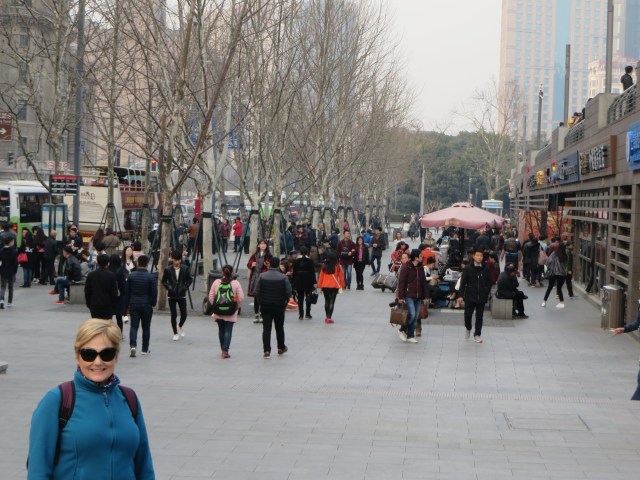
When Tanya and Jay last visited Shanghai, in 2001, the only building of any size on the east side of the Huangpu River was the Pearl Tower. dsc_0020Ten years before that, the eastside Pudho area was mostly rice paddies and fields. What an incredible difference from that last visit. What has also increased dramatically, unfortunately, is the level of air pollution in China’s second most populated city. We took the 40-second high-speed elevator ride to the top of the 88-story Jin Mao building to get an overview of the city. Impressive, but not what you’d call picture perfect.

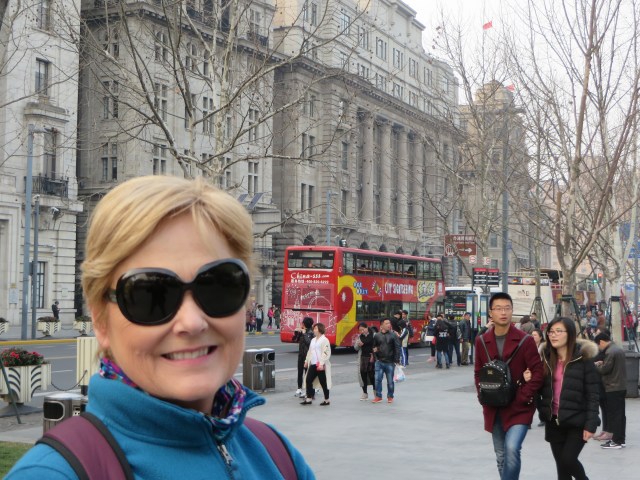
The air got a little better as the day wore on, but even though Shanghai is primarily a business and banking center, it is the unfortunate recipient of the industrial output from southern China’s manufacturing centers. Jay and Tanya strolled along the Bund, the riverside walkway and boulevard skirting the west side of the river and home to the 19th century colonial-style buildings Shanghai is famous for. img_2994img_2998img_2999img_3000

On our walk back we spotted the Russian consulate. Jay calls it Trump Tower East and is sure there will be a welcome bed for our leader should he visit Shanghai. img_3001

Shanghai at night is truly spectacular and is an ever-changing kaleidoscope of color as dinner boats share the Huangpu with the ever-present ships and barges of commerce plying its waters.

Posted in Asia, China | Leave a comment

A Morning on the Great Wall

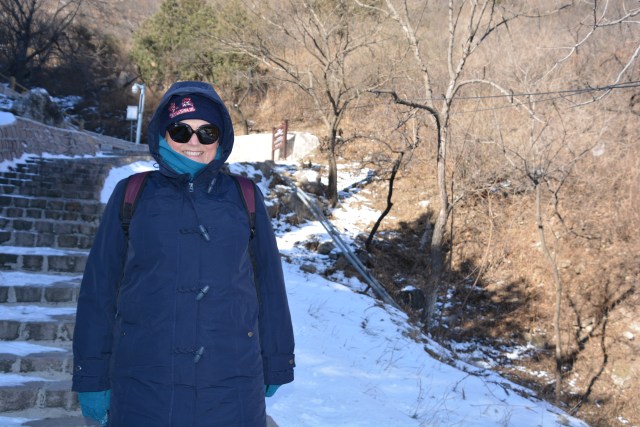
A freezing winter weekday morning is the perfect time to visit a portion of the Great Wall. dsc_0055dsc_0058dsc_0059

Jay and Tanya stayed the previous evening in Beijing. We enjoyed freshly prepared vegetables and noodles at a tiny tucked-away neighborhood restaurant, where we were the only foreigners. Since our knowledge of Mandarin doesn’t extend much beyond “hello” and “thank you” ordering was of the “pointing at a picture” or “gesturing to a nearby table—I’ll have what they’re having” variety. The wait staff enjoyed the hilarity of our trying to maneuver long noodles into tiny bowls—obviously not the right receptacle for this food item—and were gracious enough to help these two foreign nincompoops as they worked their way through dinner.

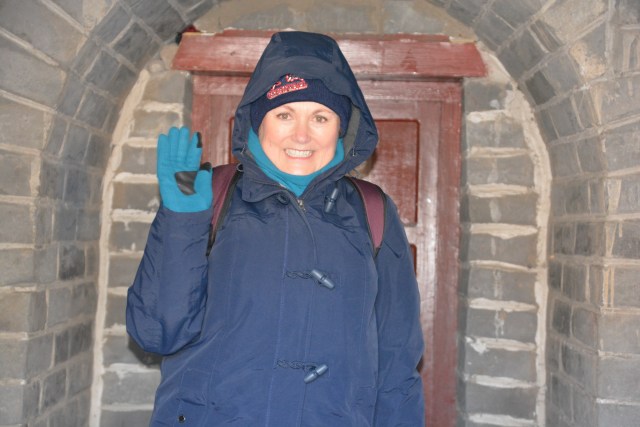
Afterwards, a relaxing sleep at the Sunworld Hotel, near Tiananmen Square, and we were off early the next morning to visit the portion of the Great Wall at Badaling. Tanya and Jay had last been here 15 years ago, in late August, when the weather can be hot and humid and the crowds can be heavy. What a difference this time! We arrived at the ticket booth about ten minutes before it opened and we were the first, and practically only, visitors on the wall! Amazing!

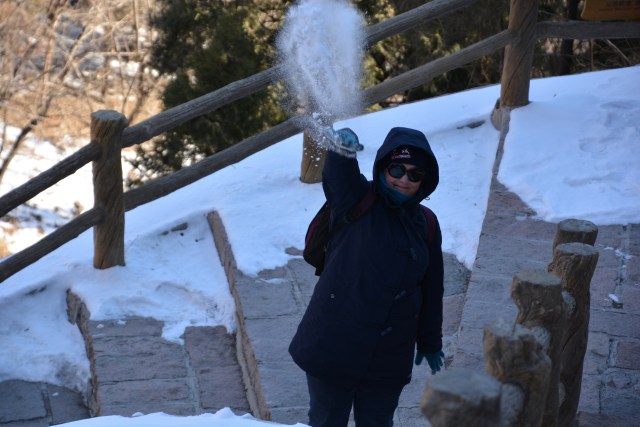
Fortunately, neither of us has brain disease so we were confident in our ability to hike up the wall. dsc_0056dsc_0063 It was a glorious morning. dsc_0062dsc_0064dsc_0065dsc_0067dsc_0068dsc_0069dsc_0071dsc_0072

Posted in Asia, China | 8 Comments

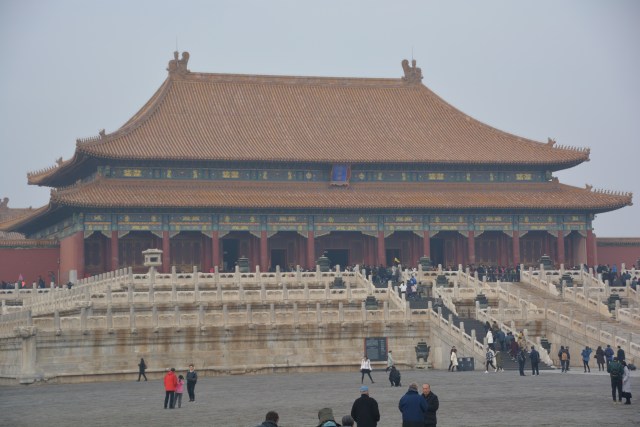
Tiananmen Square and the Forbidden City

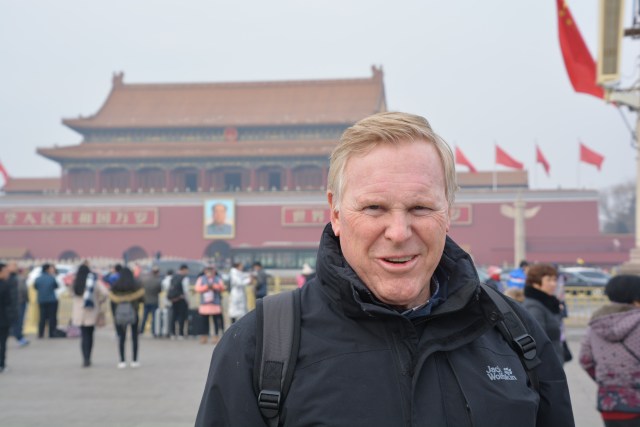
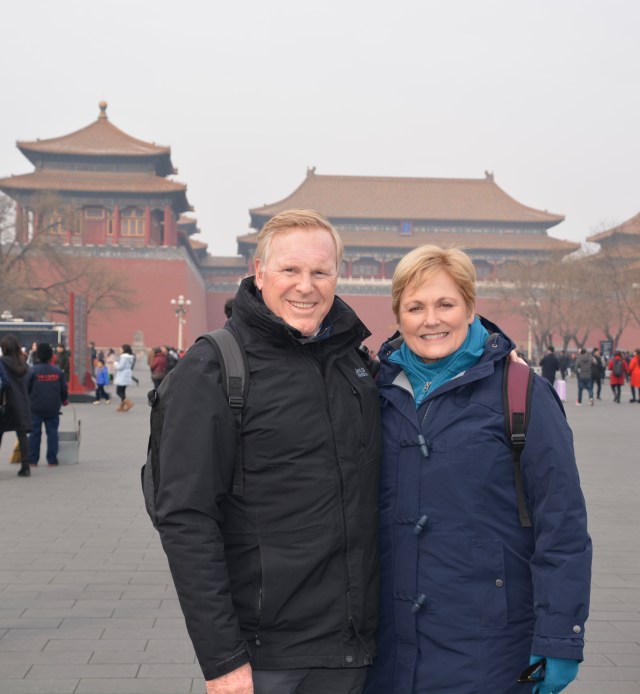
dsc_0014“A smoggy day, in Beijing town…” well, you get the picture. While the air quality was on the low side, the fun and excitement of visiting this incredible place in the world was definitely on the high side. Tanya and Jay attacked the Forbidden City with zest and, at this time of year, crowds were relatively light. dsc_0032

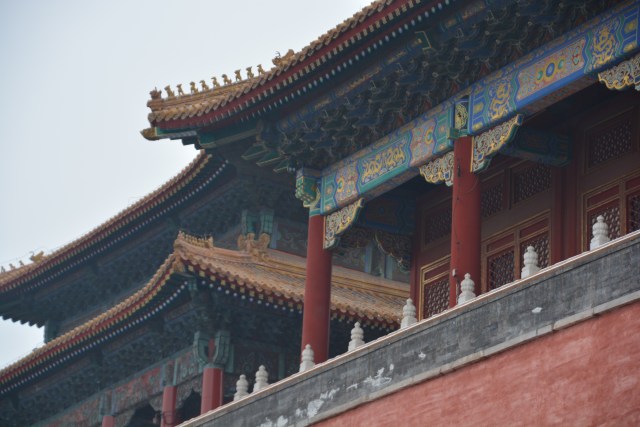
At 34 acres, Tiananmen Square is the largest square in the world and is a highlight in itself. But the real attraction is the Forbidden City, a complex of palaces and buildings covering over 250 acres and the center of power for the Qing and Ming dynasties. February is a perfect time to visit. dsc_0008dsc_0010dsc_0013dsc_0016dsc_0026dsc_0028dsc_0030dsc_0031dsc_0033dsc_0040dsc_0044dsc_0046dsc_0051

Posted in Asia, China | 1 Comment