
How many of you remember the movie, Dirty Dancing? How can we forget Patrick Swayze and Jennifer Grey as they had the time of their lives despite the disapproval of Jennifer’s (Baby’s) parents. The film’s story takes place at a traditional family-oriented mountain resort not much different than where Tanya and Jay spent an early September weekend.


While our dancing could hardly be considered dirty we did have a pretty good time at the Eden au Lac overlooking the small town of Echternach, in eastern Luxembourg, just over the river Sauer from Germany.

Something that is fascinating for Americans is how different two next door countries can be. As soon as you cross the small river from Germany into Luxembourg, the roads are smaller, the traffic is slower and, of course, people speak French (or Luxembourgish). The whole flavor of the place is different. It’s something you just don’t experience, for comparison, when crossing the Interstate Bridge from Portland, Oregon to Vancouver, Washington. Echternach is a cute little medieval town steeped in religious history. The town, now population 5,400, grew up around an abbey which was founded in 698. The abbey still stands and is the primary tourist attraction of the town. But for us, we were more interested in just kicking back on this fall weekend, enjoying the resort and doing some hiking nearby.
Staying at Eden au Lac is like stepping back in time, at least to the 1960’s. The old-style front desk is very prim and features a very French desk manager who hands out room keys affixed to heavy attached weights decorated with deep red tassels. This place is straight out of a Peter Sellers’ movie. Think Inspector Clusseau asking, “Do you have a rrrrooom?” The resort features outdoor and indoor pools, sauna and the rest of the sort of spa amenities one expects. The place closes in the winter but during summer months you get the idea that the same families have been coming here for decades. Pretty relaxing.


We spent one day hiking on the nearby Müllerthal Trail which is actually a series of trails in the area west of Echternach. The area is known as the “Luxembourgish Switzerland” but that’s a pretty big misnomer since it’s actually nothing like Switzerland. This is Luxembourg after all with the elevation of the trail never exceeding 1,300 feet. But, it is pretty and there are some challenging sections. One of the trail’s features is the “Schiessentümpel Cascades” which is mentioned in every tourist publication as something quite noteworthy. For people from the Pacific Northwest of the US the falls could be considered to be not that big a deal but visitors here were enjoying themselves out in the woods so that’s a good thing.


Whether you want to dance dirty or get dirty hiking, this part of Luxembourg is worth a visit.
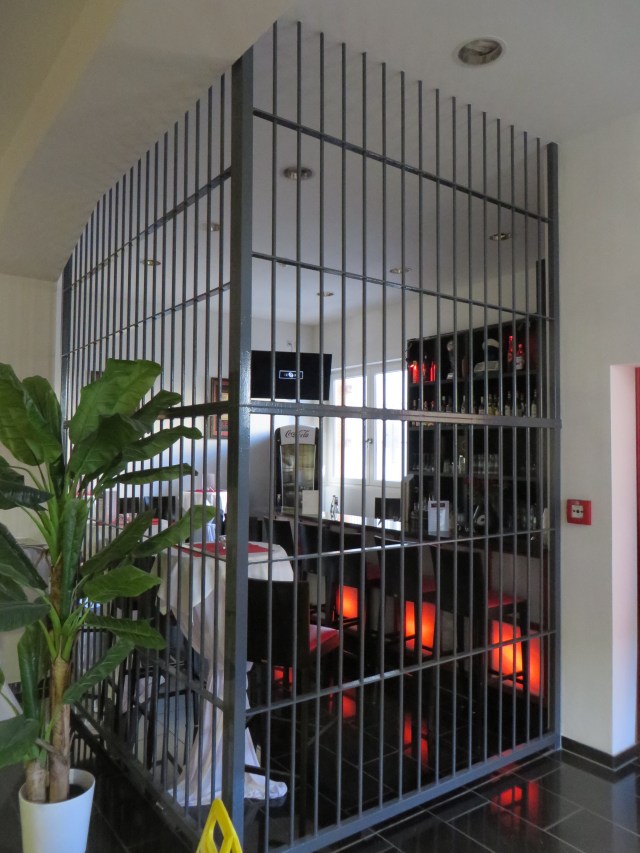
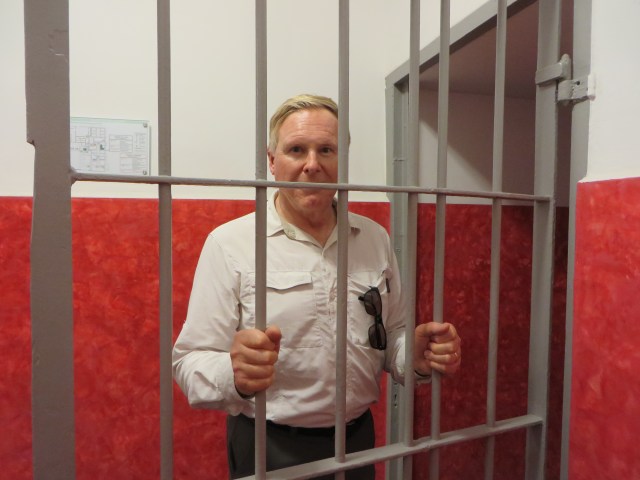 No, we weren’t arrested for causing a big scene after too much beer and schnitzel. And no, Tanya didn’t cause a stir by dancing on a restaurant table, all the while trying to chat up an arresting officer who was politely trying to talk her down. No, our incarceration was completely voluntary and in lieu of bail all we had to do was pay for the night’s lodging. They even gave us breakfast before sending us on our way. The jailer was really very sweet and gave Jay a nice smile as he was being released.


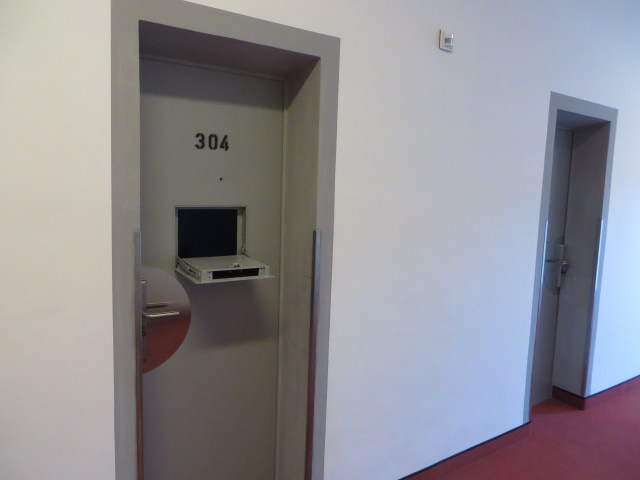

 Asking for a double means getting a bunk with upper and lower.
 We had our own car with us but if you need transportation the prison bus is always an option.
 The hotel limo looked like it hadn’t been used for awhile but we’re sure that with a little coaxing it could be put back into service in no time. Well, maybe a little more than no time, but you get the picture.


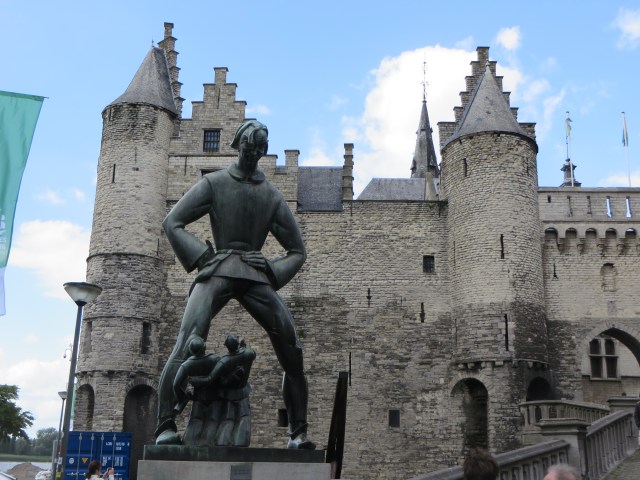
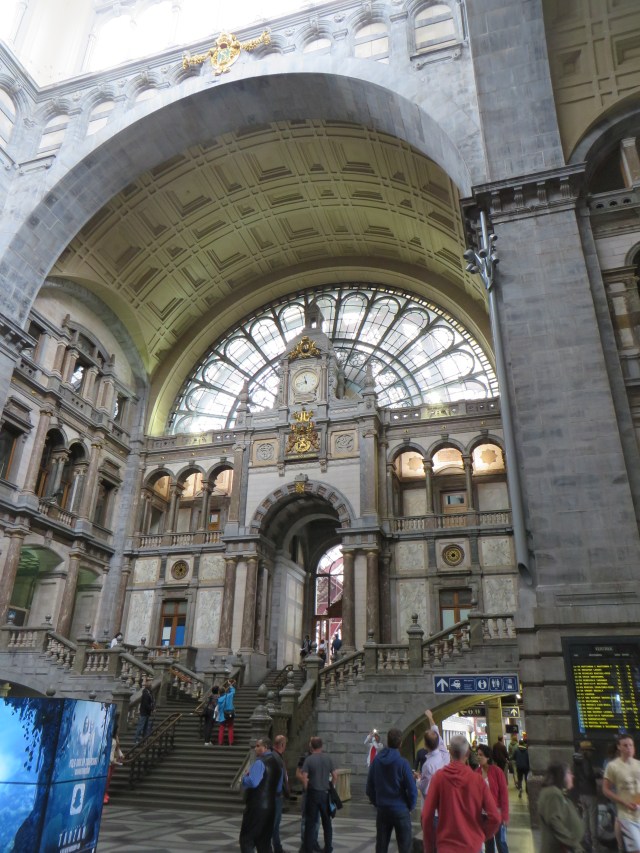
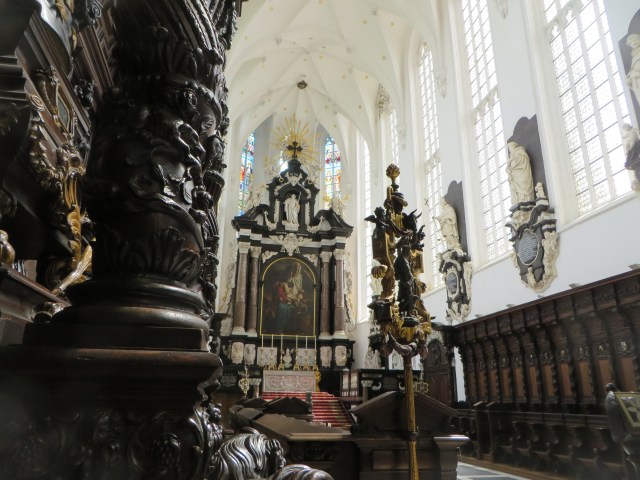
 Jay finds great joy and humor in the origins of words. We had the chance recently to visit Belgium’s second largest city, Antwerp, and to ponder its name. Was the city, first settled in the 4th century, way ahead of its time linguistically? Did its name refer to some little guy being made fun of and being called “A(n) Twerp”? That doesn’t seem logical, but folklore often isn’t very logical either.










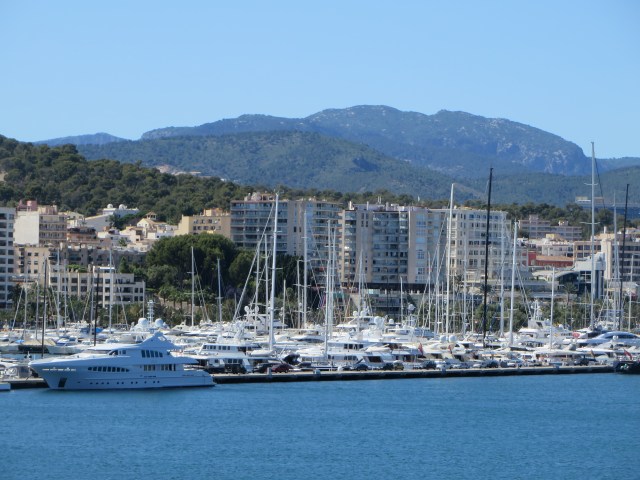 Mallorca, largest of the Balearic Islands, is part of Spain and sits in a beautiful location in the western Mediterranean. It’s very popular with Germans (and Brits) as a holiday destination and I compare it to how people on the west coast of the US look at Hawaii, although it’s a much shorter travel time. It’s the only place I’ve been where I ordered lunch in my fractured Spanish and the waitress replied to me in German.
 Even though it was pretty touristy, it was fun to ride as we passed through the Mallorca countryside.


 Alicante. The word makes me think of things other than Spain. “Drive the new 2016 Alicante by Buick. Now at your Buick dealer” or “How would you like your steak sir? And, with a little Alicante sauce on the side, perhaps?” or maybe “This piano piece should be played alicante, as opposed to allegro or pianoforte.”


 Europe’s southernmost city is a study in the layers of history that characterize this part of the world. Many travel writers are critical of Malaga as an example of overbuilding and apartment speculation that have ruined a once beautiful city and coastline.
  But that’s not what we found at all. Sure, lots of people from Britain, Russia and northern Europe have fueled a speculation frenzy over the last twenty years that ultimately resulted in Spain’s still-lingering recession. Loose, or non-existent, land use planning created mega-apartment buildings. But the core of Malaga is still attractive, vibrant and a wonderful example of the cultures that have left their mark on this city.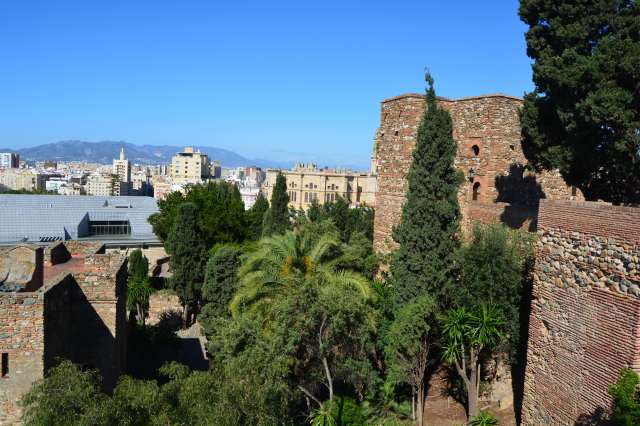


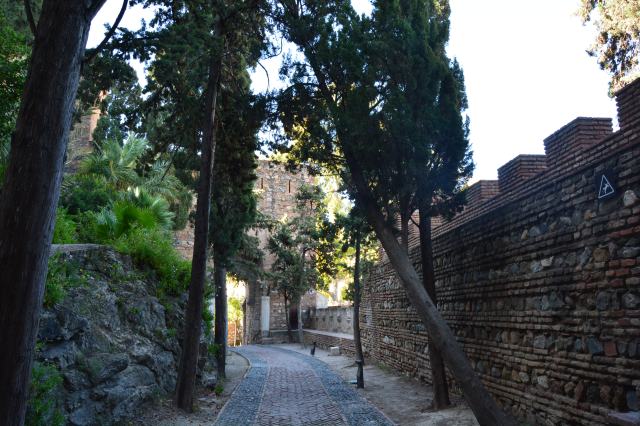 The Alcazaba was an 11th century Moorish fortress and palace built, in part, with stones from the first century Roman amphitheater, whose ruins are at its base. After the Christian re-conquest in the 15th century, parts of the Alcazaba show the presence of Spanish Christian royalty who strategically placed their coats of arms throughout the palace.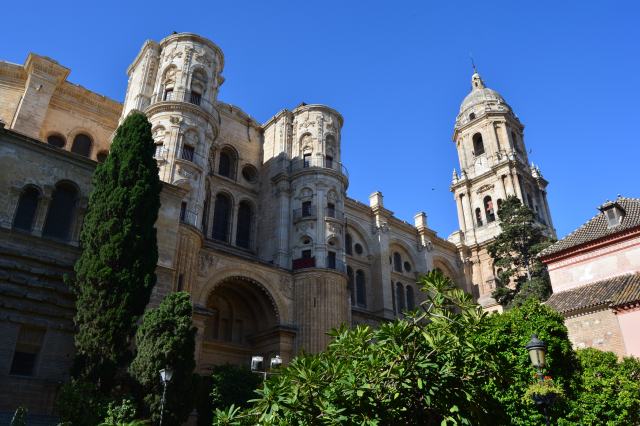


 Gibraltar is one of those geo-political anomalies that show up here and there in our world. At the very southern end of the Iberian Peninsula, it was given up by Spain to Britain under the terms of the Treaty of Utrecht in the 18th century. I think Britain would just as soon give it back to Spain but every time there’s a referendum, Gibraltarians vote to remain British. Gibraltar’s only access is either by sea or by walking or driving across its airport runway coming from mainland Spain.
  It’s a small place with its own currency, the Gibraltar pound, which is only good on Gibraltar. Its main sources of income are from VAT-free shopping, bunkering of cargo ships and from tourists eager to ascend the Rock of Gibraltar, either by cable car or mini-van, to tour the Rock’s myriad of tunnels and caves and to see the Macaques aka Barbary Apes. Legend has it that the Brits will never leave Gibraltar until the last Macaque dies. Needless to say, the primates are protected, fed and breeding is encouraged. The apes tolerate the hundreds of daily visitors to the Rock but aren’t necessarily very friendly and can be aggressive if they feel threatened. They’ll grab a water bottle or anything that even looks like food right out of your hand.


 The Christian holiday of Corpus Christi was celebrated in Sevilla during our visit and it was a fascinating look at how Sevillanos (just guessing at this) enjoy this special day. Different neighborhood groups, complete with their own bands, conduct processions to the cathedral. Afterward, and actually during for many, the holiday is used as an excuse to party and socialize with friends. Great fun!


 Never Left Home