“Here’s looking at you kid” and “Come with me to the Casbah”

Casablanca. Ah, doesn’t this very name conjure up visions of intrigue and romance? Who can ever forget that torrid affair between Humphrey Bogart and Ingrid Bergman, “We’ll always have Paris”. Victor Laslow, the letters of transit, Sidney Greenstreet. These are the images of Casablanca that are forever embedded in our consciousness. And so it was that our intrepid duo went searching for that film-created fantasy in this famous northern Moroccan port.

Of course, much of “Casablanca” was shot indoors so it’s impossible to know what the real Casablanca should look like. Looking for “Rick’s”, based on its neon sign entrance in the film is hopeless. And, of course, there is, or was, no “real” Rick’s. All we were left with was the name and the story in “Casablanca”. In the end, the fantasy remained intact as today’s Casablanca has absolutely nothing to do with “rounding up the usual suspects” or “Here’s looking at you kid”.

What we did find, however, (it was hard to miss) was the Hassan II Mosque, either the third or second largest mosque in the world, depending on which tourist brochure you read. Built along the Casablanca waterfront, the mosque is truly huge, with a sprawling plaza that serves as a community meeting place for worshippers and residents. IMG_3357IMG_3359IMG_3363IMG_3365
Outside the mosque, young boys race from the pavement, jump over a concrete barrier and dive head-first into the sea, bravely missing the rocks along the shore. This activity seems to be a sort of test of bravery among them as they laugh and cheer each other on. None of this would ever have appeared in Bogie’s film. IMG_3351

Not to be deterred in their search for cinematic inspiration, Tanya and Jay teamed up with another pair of travel maniacs we had recently met to find the Casbah. For some of us, the movie phrase, “Come with me to the Casbah” sticks in our heads but we have no idea where it comes from. For a bit of background, it’s from the 1938 film, “Algiers” where Charles Boyer’s character tries to entice the ingenue played by Hedy Lamar to join him at…..well you know where. The phrase was never actually used in the film but only in the trailer promoting it. But, more interestingly, Boyer’s character, Pepe le Moko, was the inspiration for Warner Brothers’ 1945 cartoon character, Pepe le Pew, a French-accented skunk who was forever looking for love and used the memorable phrase, “Come weez me to zee Casbah”. So, it’s actually Pepe le Pew (originally voiced by Mel Blanc) that we baby-boomers associate more with the phrase than we do with Charles Boyer. Incidentally, Mel Blanc was also the voice for Bugs Bunny, Daffy Duck, Porky Pig and lots of other cartoon characters, but we digress.

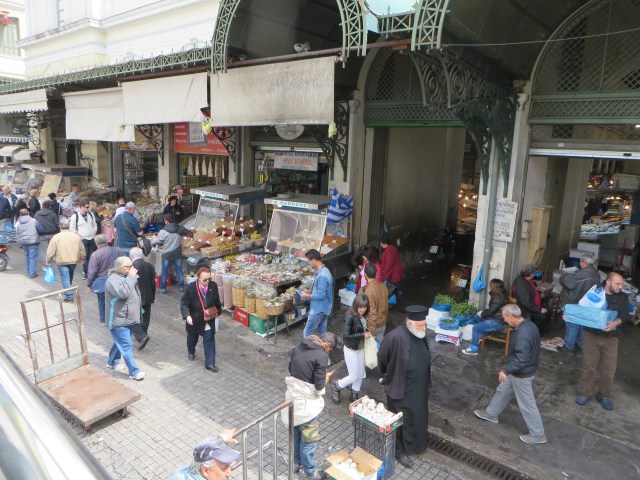
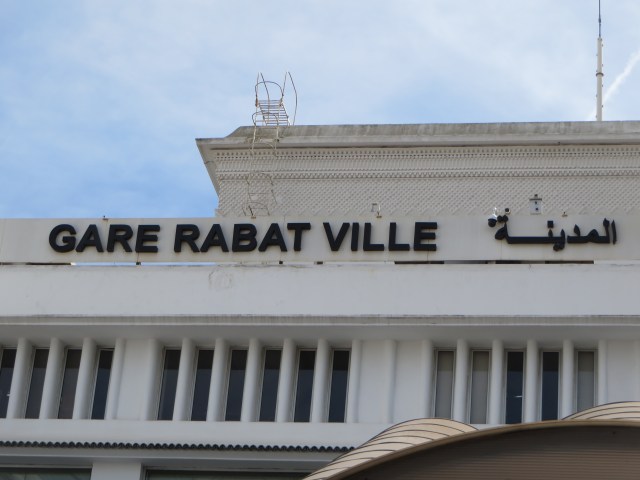
To find this “Casbah”, Jay, Tanya and our two new friends, Derk and Eugenia, took the Moroccan railways train from Casablanca to Rabat. The trip takes less than two hours and the train stops at several towns along the Moroccan coast before arriving at the capital. Using a zippy new mapping app Derk had downloaded on his iPhone, he guided us along as we explored the city from the train station. IMG_3314IMG_3317First along the way was the souk, where one can buy everything from cows’ hooves to belts.
Winding our way through the narrow alleyways, we paused for lunch, freshly grilled lamb kababs served in a pita-style bun. At about 50c each, not bad. IMG_3347

Derk assured us we were on the right track toward the Casbah, so we traveled on. Along the way, one of us asked, “What exactly is a Casbah”? Good question. A word search revealed that a “Casbah” is a northern African fortification, to include the neighborhood surrounding the fort itself. This becomes a critical point as we got nearer our destination because several self-appointed “tour guides” offered to help us negotiate our way through the many alleyways of the Casbah, lest we get lost, and insisting that the Casbah would close in one hour for prayers. We declined these offers and it was interesting that 30 minutes later, we heard other “guides” urging visitors to come with them because the Casbah would close in an hour. This, of course, turned out to be erroneous information because after all, how can an entire neighborhood close? Yes, there is an old fortress and yes, there are many small alleyways, but it was impossible to get lost, especially with an iPhone mapping app. IMG_3343To be fair, there may have been afternoon prayers in a Casbah mosque nearby, but those are closed to non-Muslims anyway.

In the Charles Boyer film, the Casbah is a place where seedy characters and thieves hide out in its many labyrinths and it was undoubtedly why he was trying to get Hedy Lamar to join him there. But, as usual, Hollywood fantasy doesn’t always reflect reality. The only remotely seedy characters we found were the many “tour guides” and they were harmless. But forever we will have a new appreciation whenever we hear Pepe le Pew’s amorous plea to “Come weez me to ze Casbah”.

Posted in Africa, Morocco | Leave a comment

Easter in Cadiz

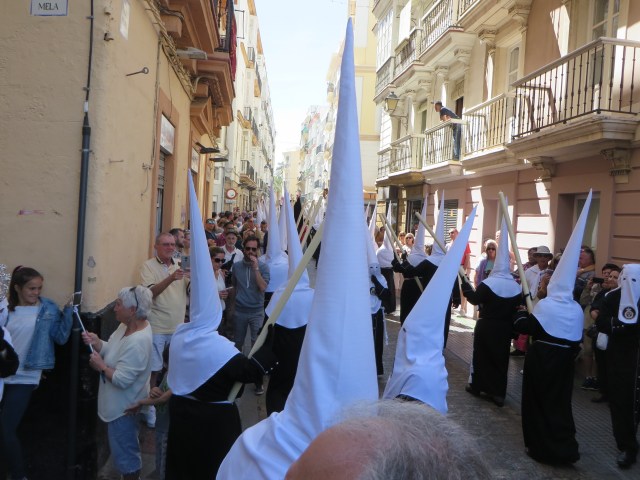
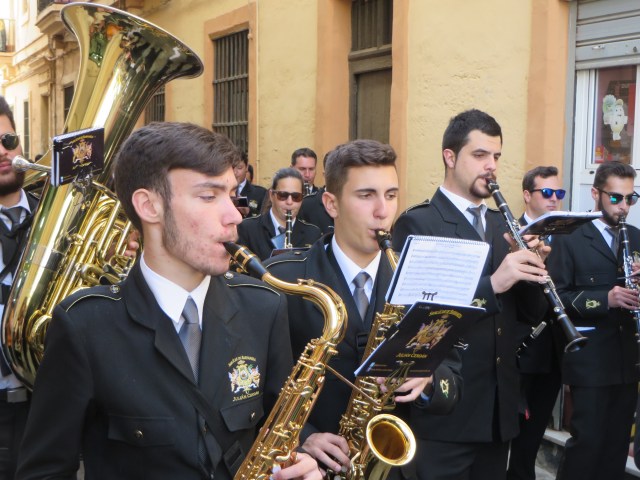
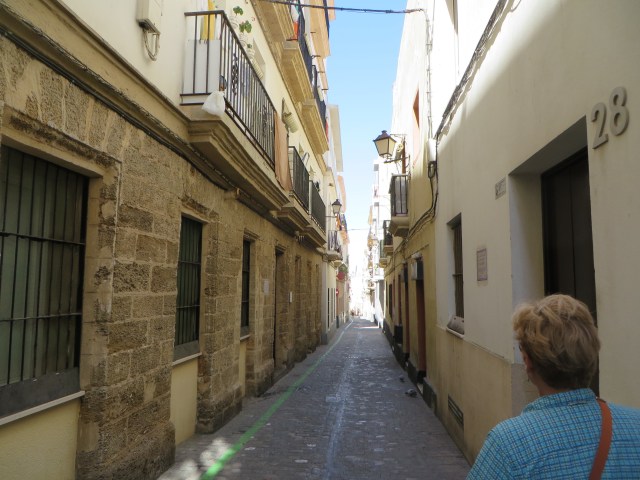
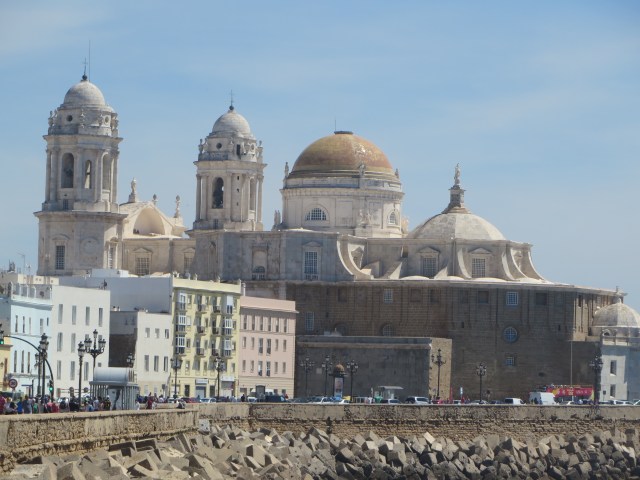
Cadiz, the beautiful port city along Spain’s southern Andalusian coast, is sometimes called “Europe’s oldest city”, but we have a hard time trying to figure out how to verify that claim. Maybe Neanderthals grouping together didn’t really have what we would call a city, but that’s OK, Cadiz certainly has enough history behind it to justify them calling themselves whatever they want. Islam and Christianity battled it out here, as well as various civilizations more interested in Cadiz’s port and strategic trading position, over the centuries. But today, the Christians are on top and there was no better way to illustrate this than on our Easter Sunday visit. The statue of the Virgin Mary was paraded through the narrow streets of Cadiz, accompanied by brass bands and the various Catholic brotherhoods in their hooded robes. It was an unforgettable experience. IMG_3278IMG_3287 (1)IMG_3288IMG_3294IMG_3297IMG_3300IMG_3304

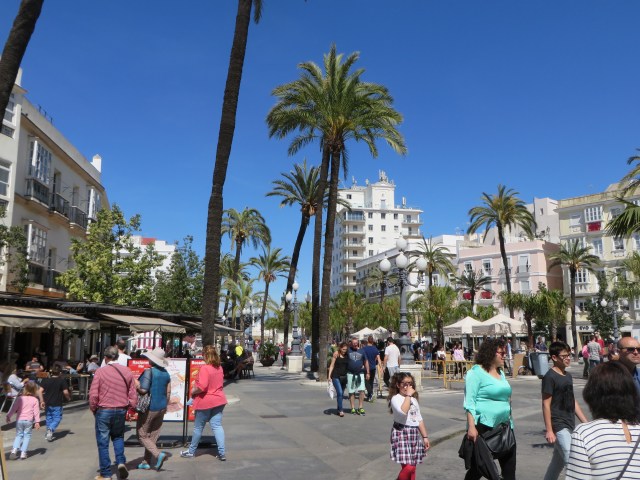
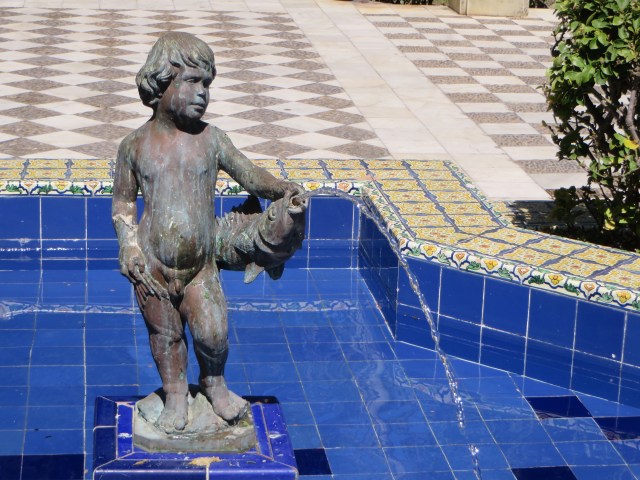
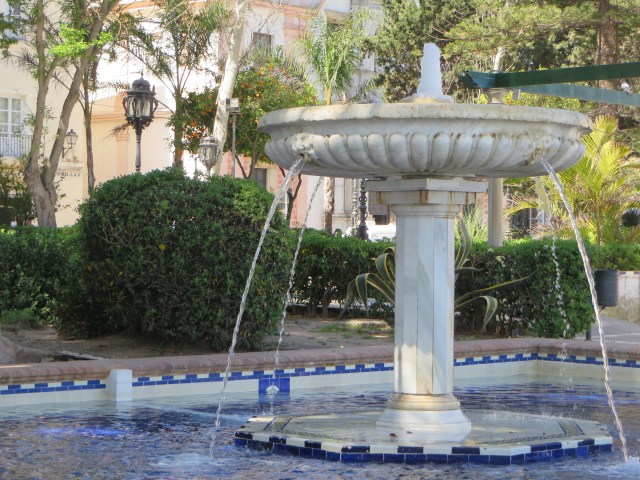
Besides witnessing the spectacle of this annual religious observance, the maniac duo of Jay and Tanya walked for hours through this gem of a city, stopping for beer and tapas for lunch and savoring the overall beauty that is Cadiz. IMG_3308IMG_3275IMG_3273IMG_3271IMG_3270IMG_3265IMG_3264IMG_3262IMG_3257

Posted in Europe, Spain | Leave a comment

We Love Barcelona!

On this second visit to Barcelona in the last two years, Jay and Tanya had to make some readjustments in our perception of the place. We try not to be influenced by popular opinion before visiting places, whether that opinion is negative, or as in the case with Barcelona, overwhelmingly positive. We take the approach that, “Hey, if everyone says Barcelona is so great, there must be something wrong. There must be some sort of faddish mass delusion going on here. It can’t be that good”.

So, we started with a re-visit to the never-to-be-completed Sagrada Famiglia, Gaudi’s enduring contribution to the Barcelona skyline and a sustainable source of construction employment for Barcelona’s workers. The completion date for this monstrosity, excuse us, work of art, is now set for 2026, but our money is on the timeline being extended. In our previous, and most controversial, blog posting on Sagrada Familia we noted that it looked more like the result of a bad acid dream, where roofs, walls and decoration kind of melt into each other. Most people marvel at its creativity, whereas we tend to think this was Gaudi’s big joke on the city. Okay, okay, we think we can all agree that whatever it is, it is amazing. Our critical opinion of the project didn’t really change on this visit.
We thought, “Maybe we just haven’t given Gaudi a chance. Let’s see some more of his work.” So, our next stop was Gaudi’s Park Güell, an unsuccessful residential real estate project envisioned by Eusebio Güell in 1900 as an estate for well-off Barcelona families. While the project was a terrific vehicle for Gaudi to show off his creativity, it was an economic disaster that was eventually acquired by the Barcelona City Council and opened as a park, a use that has proven to be much more successful than the residential project ever was. True to form were all of Gaudi’s trademark swirls, curves and overall whimsy. You’ve got to hand it to the guy, he was a terrific self-promoter who convinced folks with dough to pay for his ideas. In the end, we came away with an appreciation of this particular skill of his.

After looking at another Gaudi-designed apartment building, from the outside, eschewing the hordes of tourists waiting patiently in line to buy a ticket to go inside, we had just about reached the point of view that without the nice weather and Gaudi, Barcelona would be just another pretty former industrial town along the Spanish (Catalonian) coast.

Then, we noticed street signs directing visitors to the “Arc de Triomphe”. What? Did Catalonia have some war-time victory we’d never heard of? And where did the troops march from and to? After careful investigation, we came upon an absolutely beautiful arch set among gardens, artificial lakes, fountains and a large pedestrian walkway. Apparently this whole set up was built for one of the two world expositions Barcelona hosted in the late 19th century to promote the city. The arch was purely ornamental but what a terrific place to stroll and enjoy the afternoon.

Later, we drove up one of the hills overlooking the city to see the Olympic Stadium, Olympic swimming venue and the palace of performing arts.DSC_0141DSC_0142

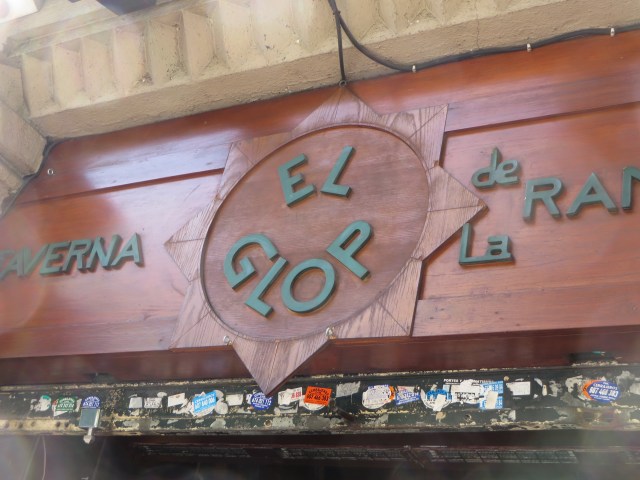
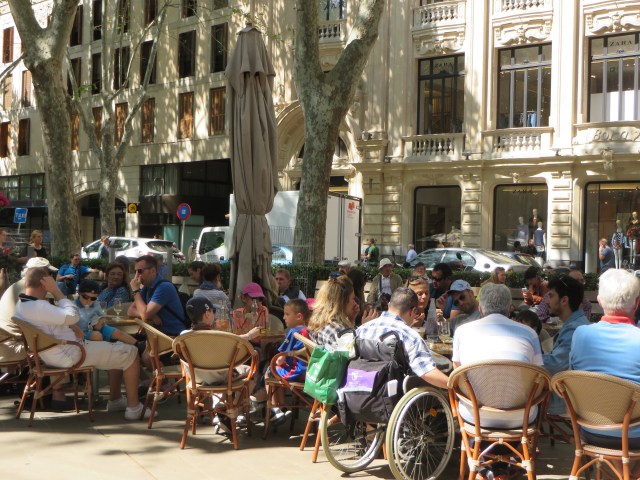
Of course, one of the highlights of any Barcelona visit is the fabulous cuisine. We stopped at our favorite tapas place along La Rambla, but for others there is always the ever-popular, “El Glop” near a full-service business supply store. IMG_3227IMG_3228

OK, the end result of this visit is that, even including Gaudi, we really enjoy Barcelona and look forward to the next time we can enjoy an extended visit.

Posted in Europe, Spain | Leave a comment

Palma de Mallorca, Spain

Germans, and other northern Europeans, love vacationing in Mallorca and it’s easy to see why. Jay likes to compare the German affinity for the island to folks from the Pacific Northwest USA enjoying Hawaii. Mallorca is easily reached from several European airports and within a few hours northern Europeans can escape the sometimes bitter cold to relax in a mild and pleasant climate. IMG_3214

Mallorca is part of the Balearic Islands, which have been an autonomous region of Spain since 1980. The native language here is Catalan and there is a local Mallorqui dialect, but Spanish is the primary language used here, along with German, which is used when speaking to anyone who appears not to be from Mallorca. After all, the majority of foreign visitors are Germans.

The history of Mallorca, like much of Andalusia, on the Spanish mainland is filled with the continual battles and struggles for control between Christians and Muslims and the island was under Muslim control from roughly 902 to 1250. This back and forth conflict of cultures resulted in the often-seen juxtaposition of Islamic and Christian architecture, here seen in the Palma Catedral with its spire rising above Moorish-style arches.


On Tanya and Jay’s last visit to the island, we explored the northwest part of the island, riding the rails in an antique wooden train car to the city of Soller. This time we spent our day exploring the capital city of Palma. What we found were beautiful city parks and fountains, gardens and people enjoying the laid-back atmosphere. We even noticed a bit of Gaudi-inspired features on downtown buildings. After a day in Palma, it’s easy to see why Mallorca is such a popular destination.


Posted in Europe, Spain | Leave a comment

Valletta, Malta

“Is Malta a country?”, we heard a fellow traveler ask his companion. Well, Jay and Tanya felt pretty smug that at least we knew Malta was indeed an independent country, partly because we knew the former US Ambassador here several years ago. But, we didn’t know much more than that and so weren’t really more terribly informed than our shipmate. So, we had to quickly get ourselves up to speed on the basics.

According to Lonely Planet, tiny Malta, and its neighboring island of Gozo, is the smallest country in the European Union, with a population of just over 400,000. It’s native language is Malti, which belongs to the same language group as Hebrew, Arabic and Amharic. Over the centuries, Malta has been ruled by the Phoenicians, Carthaginians, Romans, Byzantines, Normans, French and British. But, Malta is most usually associated with the Knights of St. John, an order of European aristocrats, who were given the islands in 1530 by Emperor Charles V of the Holy Roman Empire. Without going into great detail, the Knights’ origins came from the Christian Crusades a few hundred years earlier. They were a charitable and religious order and took an oath to bring death and destruction to the infidel Muslims. For more than that, our readers will just have to look up more for themselves.

In more recent history, Malta served as an important shipping post for the British in the 19th century, expediting trade between the Far East and India, and was a strategic territory in the battle between the Allies and Nazi Germany in World War II. It has been an independent country since 1964 and joined the EU in 2004.

On our Sunday visit to Malta’s capital, Valletta, we got just a flavor of the place. Valletta is only about 1km x 600m in size so it’s impossible to get lost.

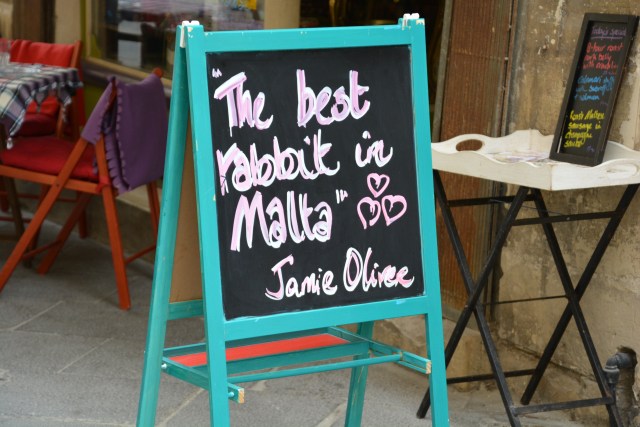
Local signs always say something about a place and Valletta is no exception. For example, we found where the “best rabbit in Malta” is served. DSC_0097 Jay was also excited to see what he initially thought was a place for a great jazz party featuring Frank Zappa. But, apparently, that’s not really what was going on here.


Posted in Europe, Malta | Leave a comment

Mykonos: A Breath of Fresh Air

Getting out of Athens and spending a day on Mykonos is like being able to breathe fresh air after being in a smoke-filled room. Not that Athens is necessarily polluted, it’s just that the island of just 10,000 people gently floating in the Aegean is everything Athens is not. Not crowded, not chaotic, clean and practically graffiti free. The day of our early April visit the weather was picture-perfect with warm spring temperatures and gentle breezes. Summer crowds hadn’t arrived yet and shop owners were busy painting, repairing and generally getting ready for the upcoming tourist season. IMG_3204

Mykonos is just so darn pretty it’s hard to believe it’s real. The sparkling white buildings, narrow alley-like streets and genuinely nice people make Mykonos a destination Tanya and Jay want to come back to and stay for maybe a week, maybe a month, maybe……. Anyway, you get the idea.


Posted in Europe, Greece | Leave a comment

A Day at the Museum

Any visit to Athens should include taking in the National Museum, also known as the National Archaeological Museum. The grounds look a bit shabby and uncared for but, once inside, the amazing works of art housed here illustrate the richness and beauty that is/was ancient Greece.

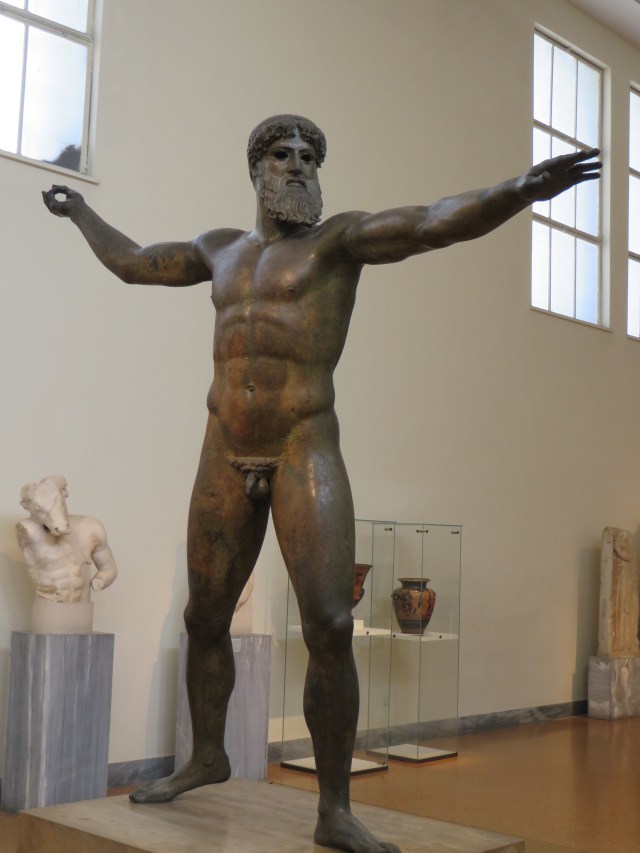
For Jay, it was a flashback to his History of Western Art course, taken 50 years ago in college. Here, in real life, were many of the works he had studied and he tried desperately, now as then, to remember their significance in the development of Western civilization. Here was “Boy on a Horse” IMG_3149and one of Jay’s all-time favorite Greek gods, Zeus, the supreme dispenser of good and evil and the protector and ruler of humankind. IMG_3150Some art historians think this work depicts Poseidon with a trident in his hand but the prevailing view is that this is Zeus, throwing a lightning bolt. Jay likes that explanation best and likes to imagine this work as an accurate reproduction of himself. Dream on, Jay.
How Rodin’s “The Kiss” got included in the museum collection is unclear but it certainly is consistent with many of the other works. IMG_3153

How many of these works do you remember from classes long ago?

Finally, check out this beautiful piece depicting a couple gazing lovingly into each other’s eyes while draped together in the same piece of material. Wonderful. IMG_3158

This is just a brief example, of course, of the thousands of pieces in the museum collection. If you get a chance to visit, the National Museum is definitely a highlight of Athens.

Posted in Europe, Greece | 3 Comments

Athens, Old and New

Athens is another one of those places Tanya and Jay had not visited for a few years, so we looked forward to seeing what had changed from before. On the old front, the monuments are still there (surprise, surprise). The Temple of Zeus is just as it has been for centuries and the Acropolis is still a massive jumble of rocks with the never-ending project of restoring what’s left of the Parthenon still underway.


And, despite the never-ending fiscal crisis in Greece, people still go about their daily business in the face of economic uncertainly. IMG_3137IMG_3141

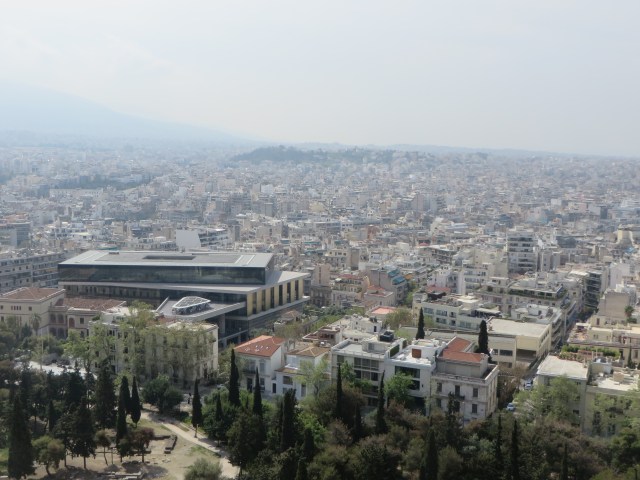
What’s new is the fabulous Acropolis Museum with its modern steel and glass providing a counterpoint to the ruins above. IMG_3195The entry plaza to the museum features glass flooring where visitors can look down at some of the layers of ruins of Greek civilization.
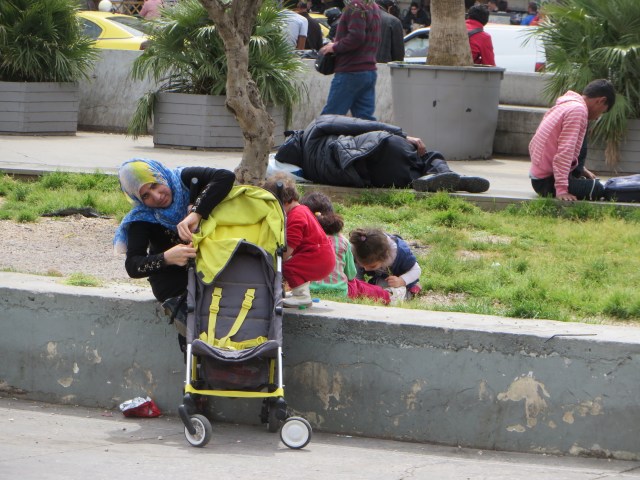
Despite the snazzy new museum and the overall improvement around the Acropolis area, Athens gives the impression of a city in decline. The comparisons between the gradual downfall of Ancient Greece and those of modern Greece are everywhere. There’s no way to sugarcoat what the visitor experiences in today’s Athens. Graffiti is everywhere—layers upon layers of graffiti, just as there are layers upon layers of ruins from successive civilizations. Empty storefronts, broken-down buildings and “For Lease” or “For Sale” signs abound. To add to Athen’s misery there are the waves of immigrants who have come here looking for a better life. IMG_3136.jpgAthens is a city that still functions, but it would be incorrect to assume it is thriving. Nonetheless, it is “where Europe begins”, according to a sign at the entrance to the Acropolis, and somehow both Greece and Europe need to work together to ensure that Greece does not become the place “where Europe ended”.
Posted in Europe, Greece | Leave a comment

Rhodes: A Quiet Sunday Morning

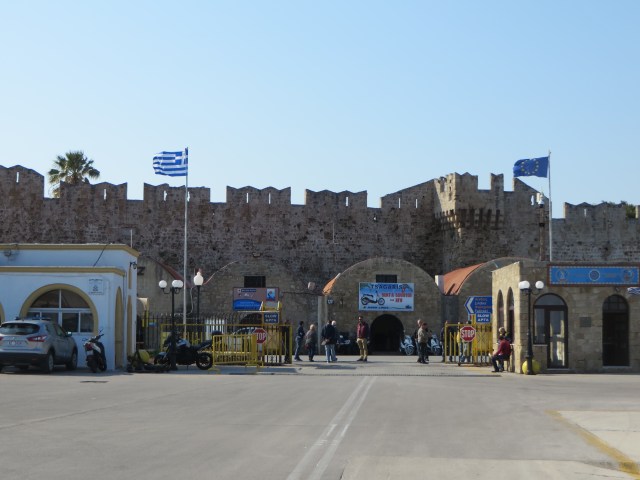
The Greek island of Rhodes was our first of five stops in the country and what a difference from our last summer visit a couple of years ago. For one thing, there was no one here. Perhaps it was simply because it was Sunday morning, maybe because it’s still early in the season or maybe because of the sad state of the Greek economy, but Rhodes’ old town was practically deserted. As we left our floating hotel to go ashore there were literally no immigration or customs agents—zero. Just come on in. IMG_3109.jpg In a way, this makes sense because once you’re here, where would you go? It’s an island for goodness sake. IMG_3110
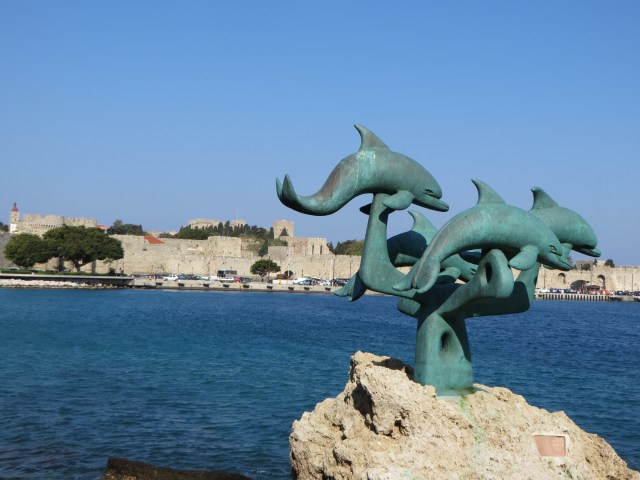
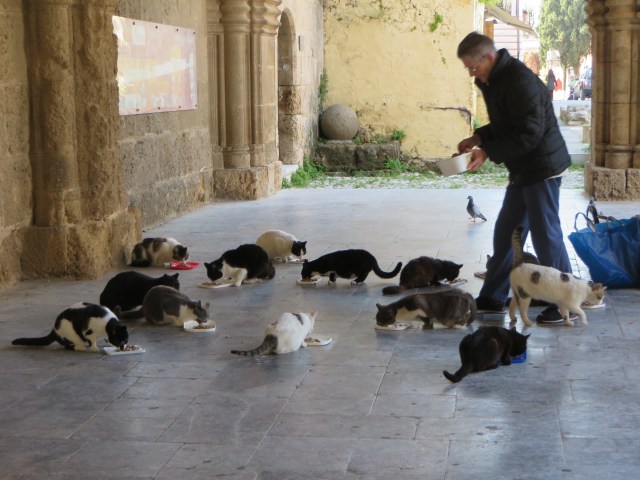
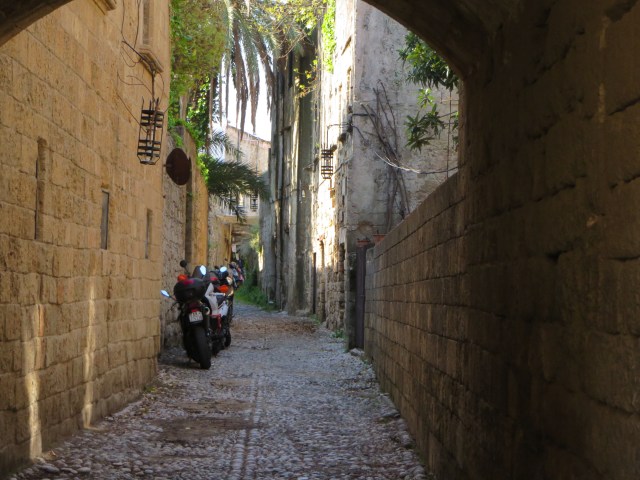
As we strolled along the Street of Knights, again no one. IMG_3111.jpg Last time we visited, the street was filled with tourists. Likewise, nearby streets were empty, with the exception of some guy feeding the local cats, who outnumbered the visitors. IMG_3112IMG_3113
We went to the Palace of Grand Masters, where last time we moved cheek-to-jowl along with gobs of tourists. Today, it was essentially deserted, with not even security people to watch over the beautiful floor mosaics. IMG_3115.jpg

We had the place to ourselves. Our takeaway from this was that early April is a pretty good time to explore Rhodes without the crowds, but don’t tell anyone.


Posted in Europe, Greece | Leave a comment

Transiting the Suez Canal

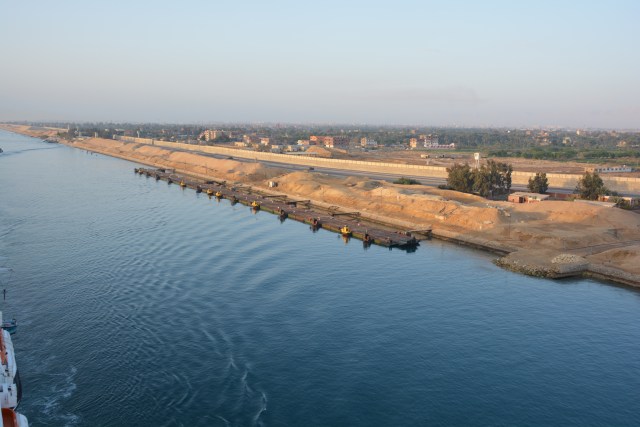
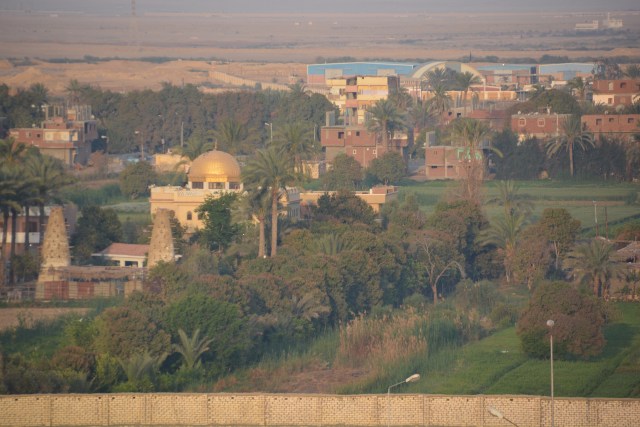
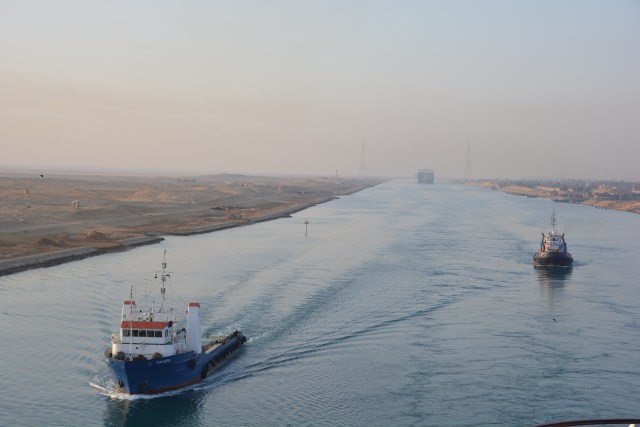
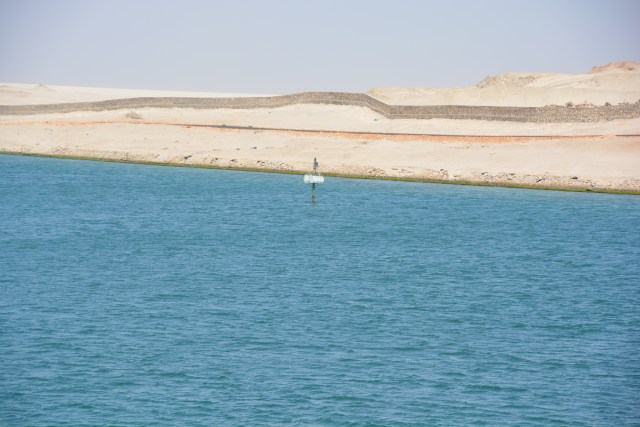
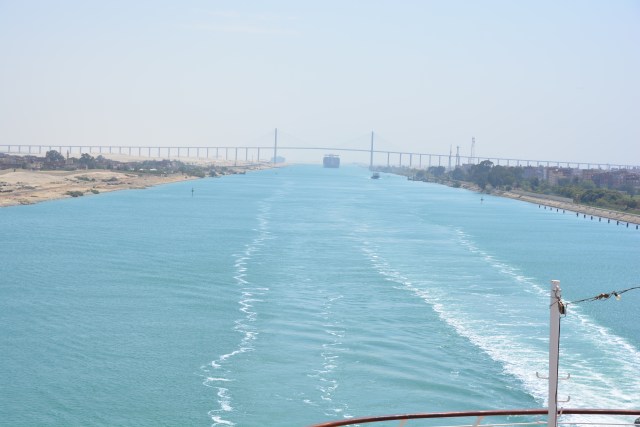
The Suez Canal, connecting the Red Sea with the Mediterranean, may lack the drama and complexity of the Panama Canal but it is still pretty amazing. The 120-mile ditch through the desert was opened in 1869 and provides a straight shot for ships traveling between Europe and Asia, without needing to navigate around Africa. Because the area is so flat, there are no locks needed for ships to make the trip, as are necessary for the Panama Canal. Seawater in the 79 foot deep canal flows freely between the two seas, with the current changing depending on the season and the tides.

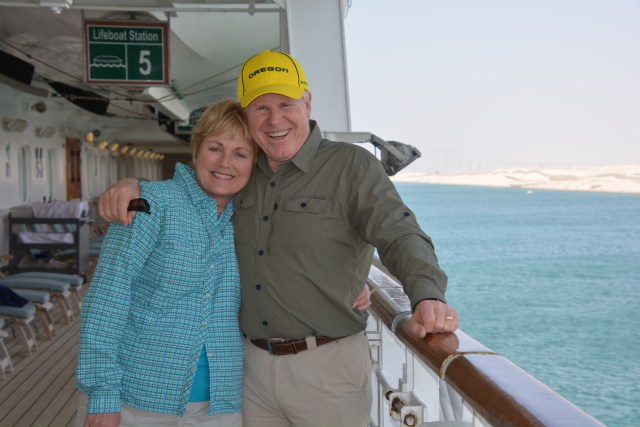
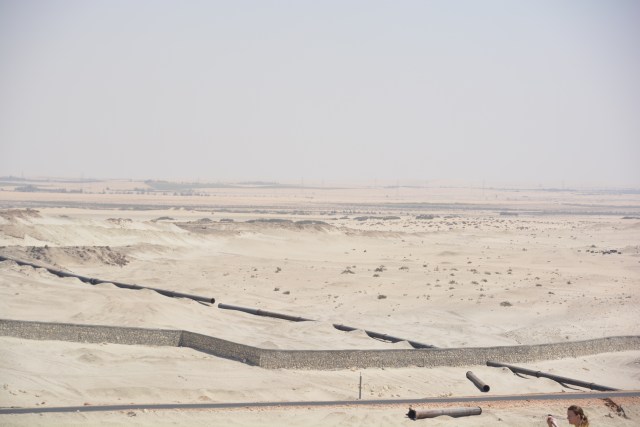
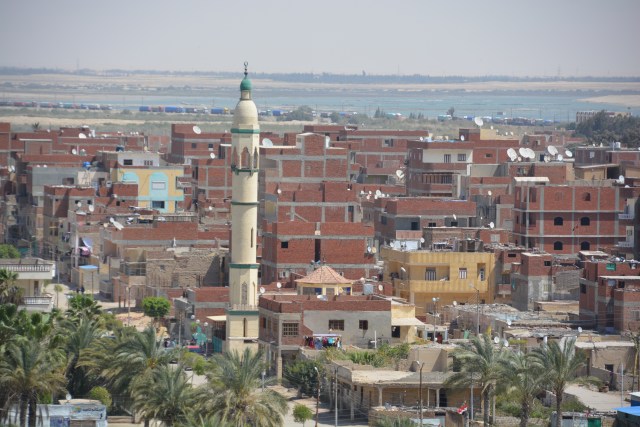
From her 13-month assignment in the Sinai, 30 years ago, Tanya recalled the weird sight from land of seeing ships moving through the canal. Looking over the miles of sand, ships look like they are literally sailing through the desert. Quite an experience. DSC_0084DSC_0086DSC_0088DSC_0091DSC_0098DSC_0100DSC_0113DSC_0121

Posted in Middle East | 4 Comments