
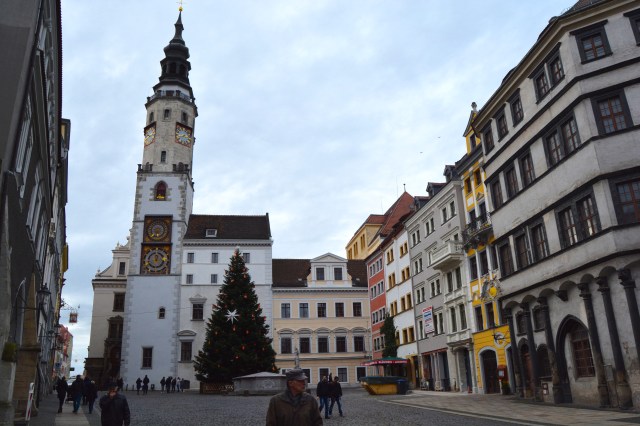
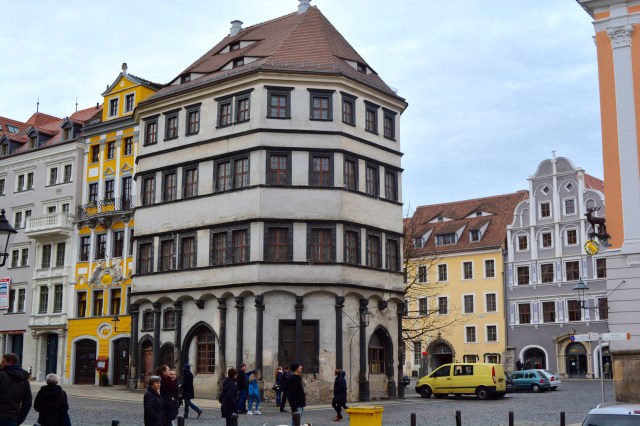
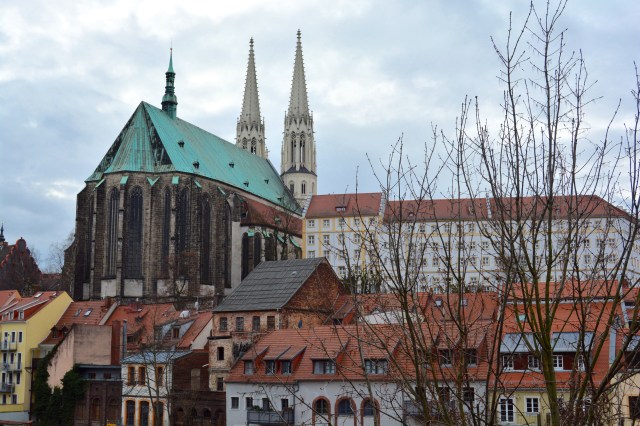
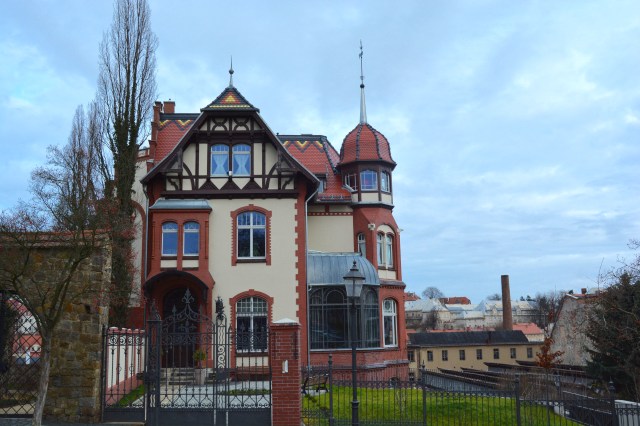
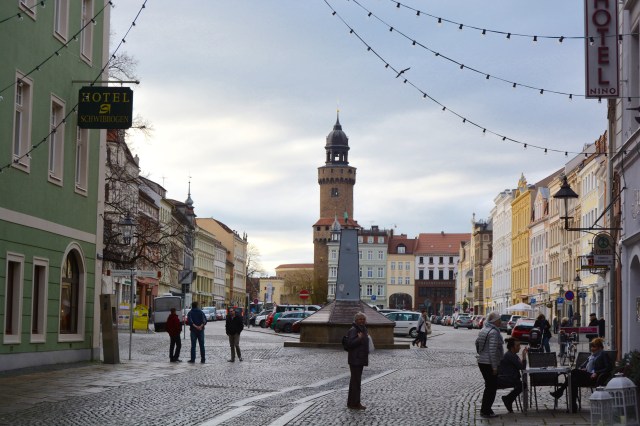
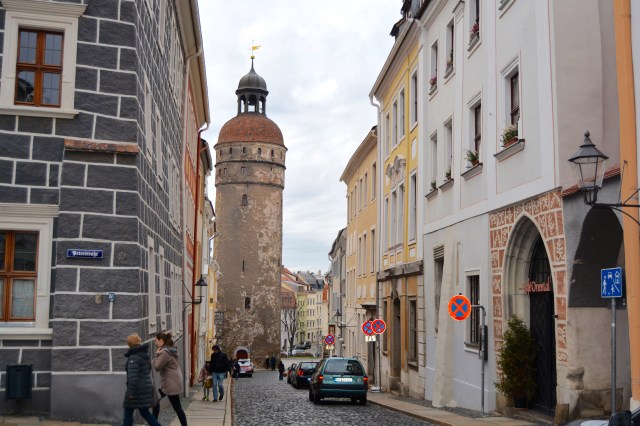
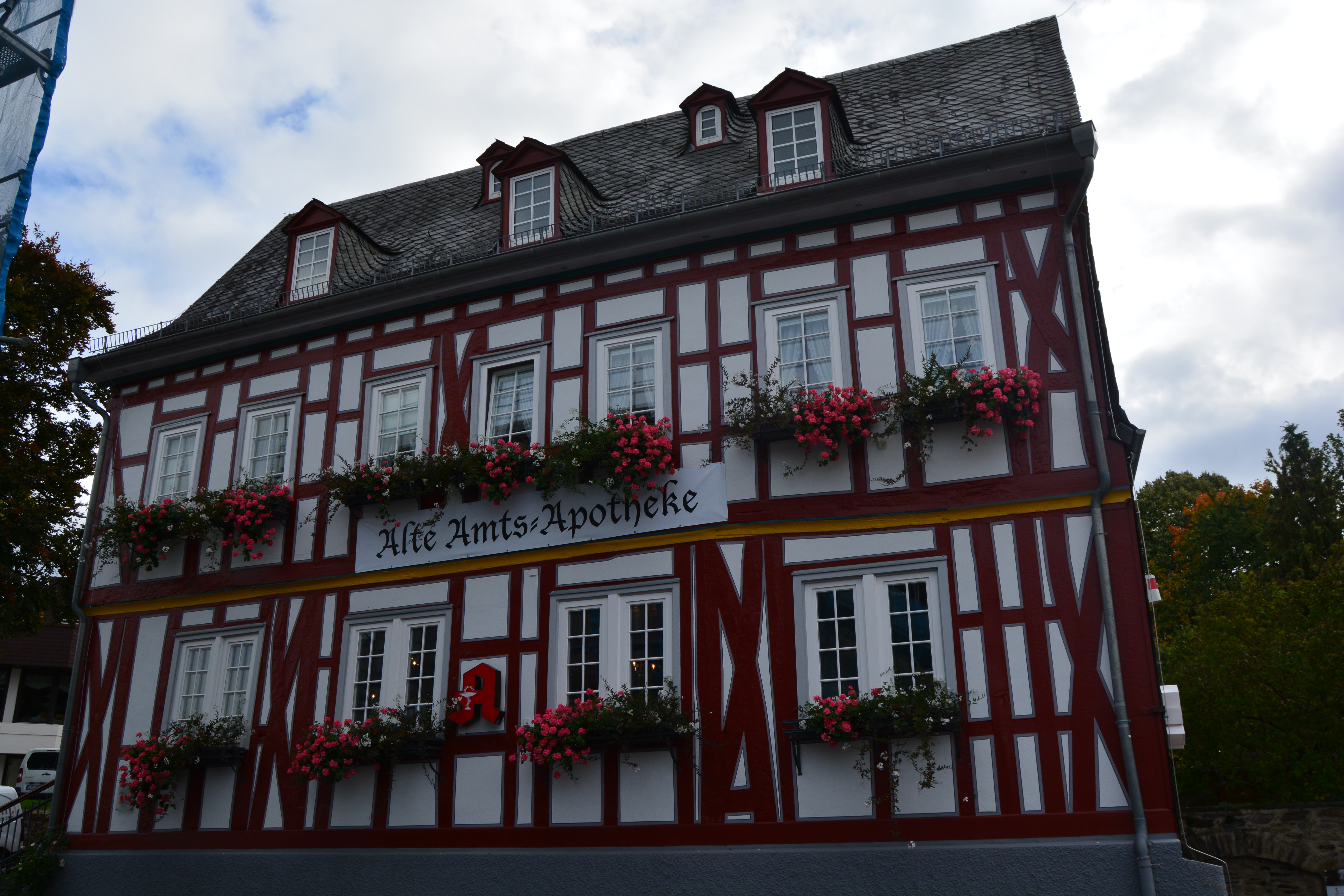
 Görlitz is not usually at the top of “must see” lists in Germany. But Rick Steves covers it in his Germany guidebook (even though he completely ignores Leipzig) so we decided to check it out last week. What we found was a pretty little city of 56,000 with wonderful restaurants and warm, friendly people. Görlitz is the easternmost city in Germany and has a very distinct character. It was founded in 1070 by Slavic Sorbs. Even though it’s part of the German state of Saxony, it really aligns itself more with the region of Silesia, which covers portions of Poland and Czech Republic as well as Germany. I got the impression that folks here consider themselves Silesians first and then east Germans. “Ostalgia” for the DDR is evident although I doubt anyone would prefer returning to that time.


Görlitz was virtually untouched during Germany’s destruction in World War II, so its buildings have been preserved rather than reconstructed. When the war ended in 1945, the city was split between Germany and Poland with the Neisse River serving as the border, Görlitz on the German side and Zgorzelec on the Polish side. A pedestrian bridge links the two cities and people go back and forth to live or work on either side.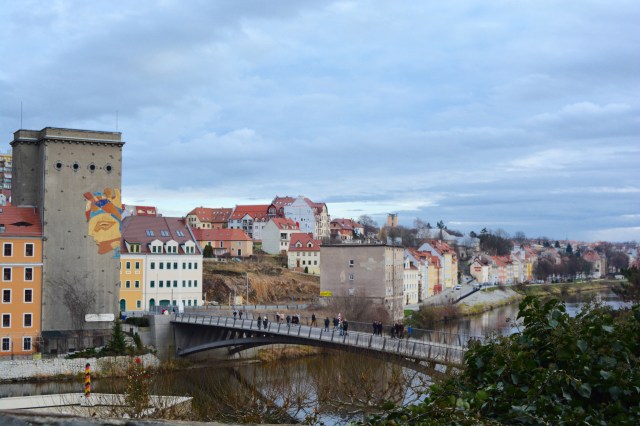
At dinner one night, our waitress asked where we were from and she was delighted when we told her that we lived in Wiesbaden. “Why, Wiesbaden is our sister city”, she noted. We hadn’t realized this, but after looking at the beautiful buildings and surrounding area it did remind us a lot of our current home town.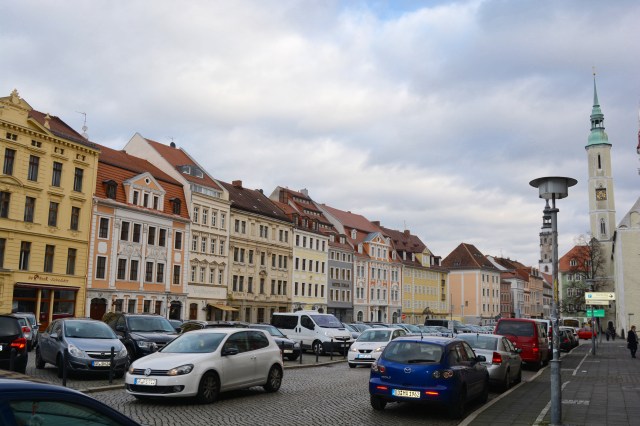
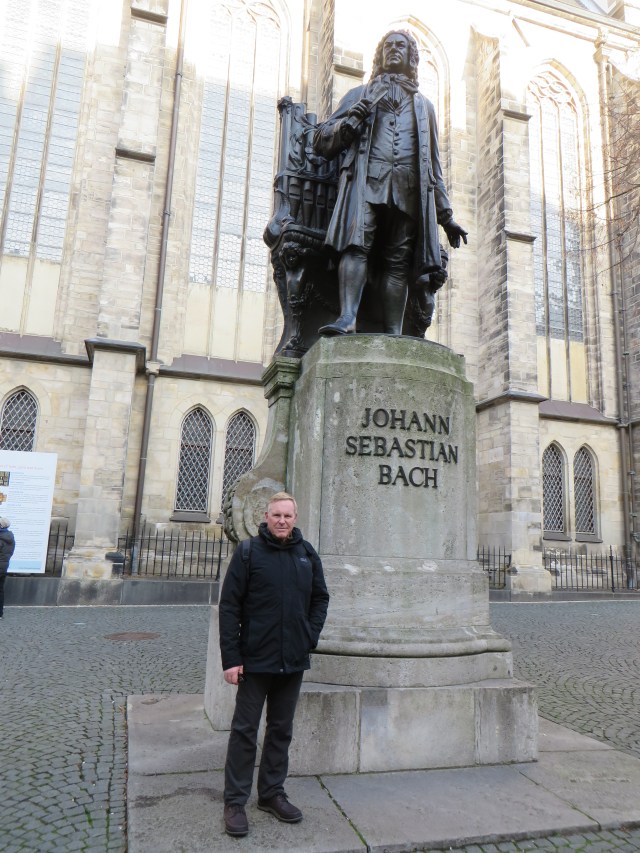
 Christmas Eve service featuring the St. Thomas Boys Choir is a special experience. This is the second time we’ve spent Christmas in Leipzig to hear the choir, which has been in existence for over 800 years. The choir started in 1212 and J.S. Bach was the choir director here at the St. Thomas Church from 1723-1750. The rich tradition of hearing these young voices performing continues.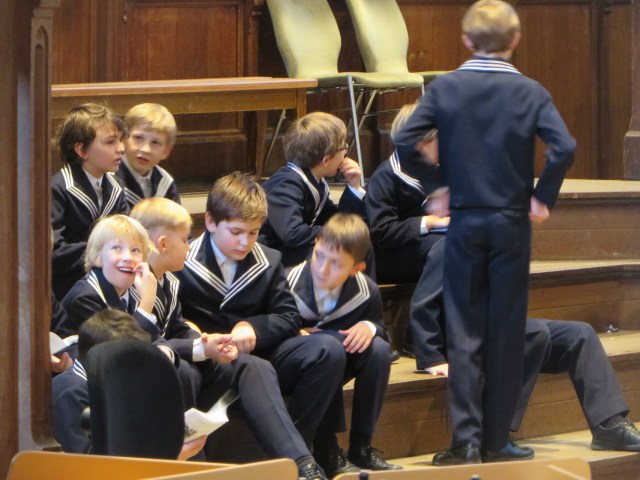
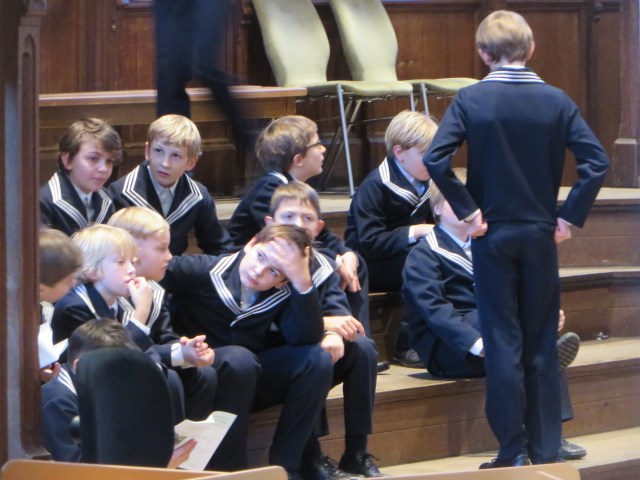 While their life may seem rigorous, the result is the opportunity to create beautiful music, to see the world and to always be known as a Thomaner. We chatted with a lady sitting next to us at the church who proudly told us that her deceased husband had been a Thomaner. We could tell that the choir essentially defines Leipzig and has been its anchor over the centuries. Two world wars and 45 years of communism could not erase the choir. There’s something about a tradition like this that helps us feel more secure in an increasingly insecure world.

























































 Never Left Home